Push to eliminate period poverty among schoolgirls
Loading article...
-
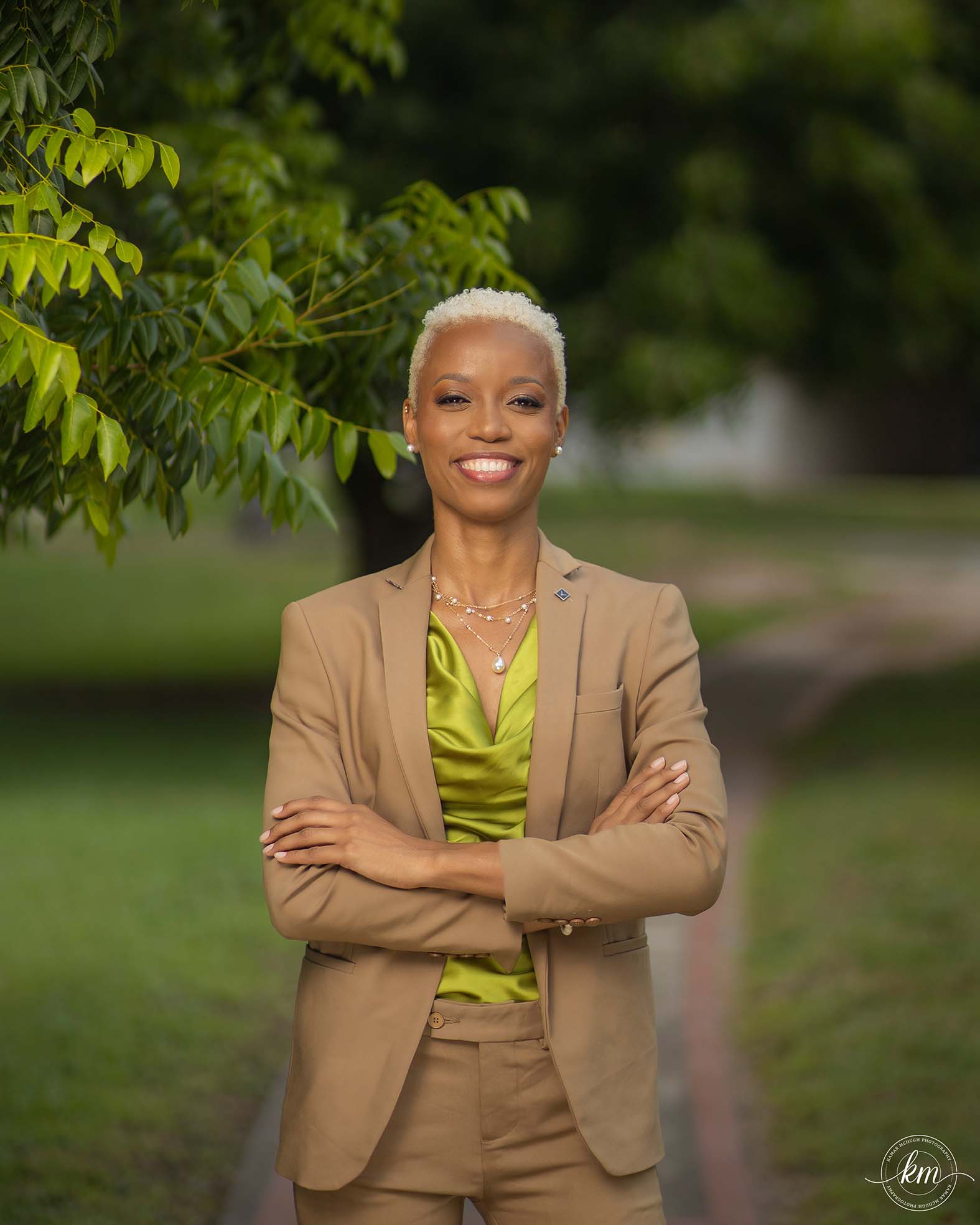 Chantaeu Munroe, Christian life coach, and CEO of CKM Healing Consultancy.
-
Chantaeu Munroe, Christian life coach, and CEO of CKM Healing Consultancy.
-
-
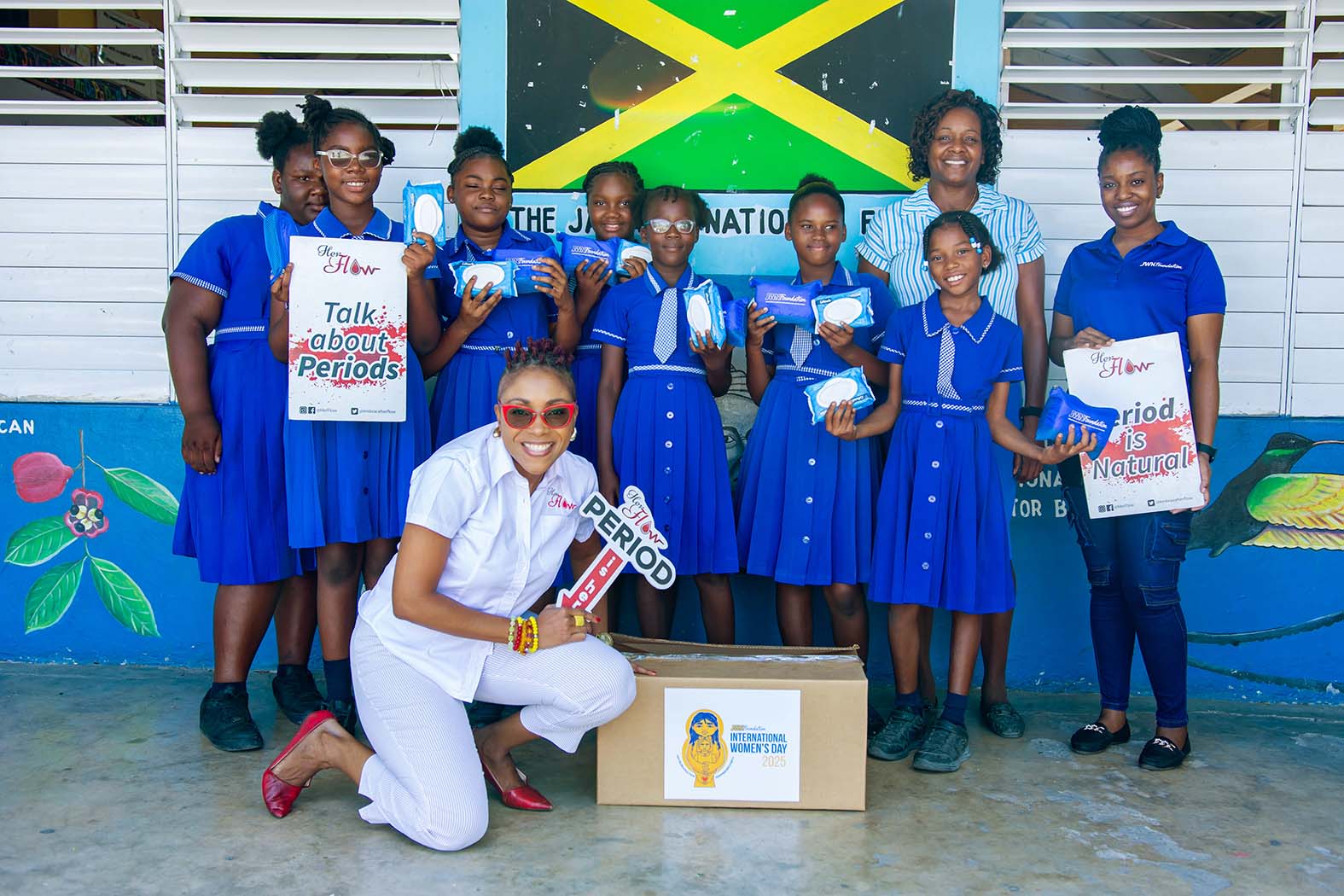 Shelly-Ann Weeks, executive director of Her Flow Foundation, with students of Balmagie Primary School along Bay Farm Road accompanied by volunteers after an End Period Poverty execution.
-
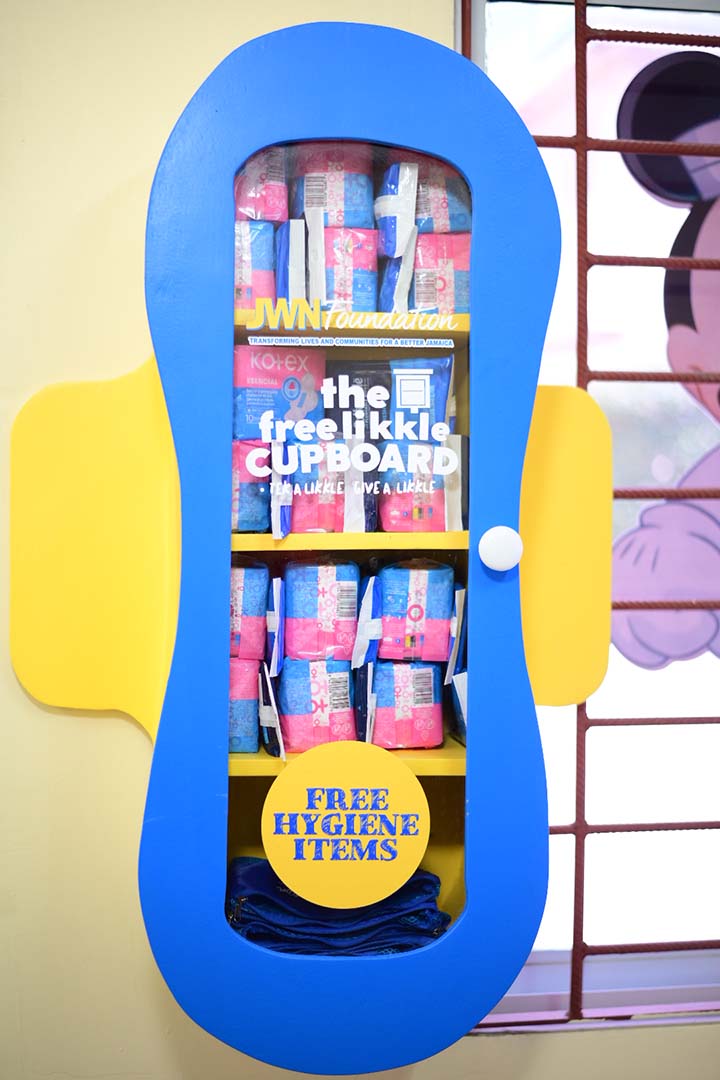 Period poverty cubicle: A sanitary napkin dispenser.
For hundreds of girls across Jamaica, the start of their menstrual cycle does not simply signal a natural stage of growing up; it marks the beginning of a monthly struggle defined by uncertainty, embarrassment, and, too often, absence from school.
In communities where basic sanitary supplies are not guaranteed, period poverty is quietly disrupting education and dignity, one missed day at a time.
At St Patrick’s Primary School, the student population reflects a broader social reality facing many communities across Jamaica. Of roughly 755 pupils, about 50 per cent are girls (375), and the needs are significant, especially among the 115 girls in grades five and six, who make up some 15 per cent of the student body and nearly a third of all girls, and are entering early adolescence.
Many of these students come from surrounding communities, such as Waterhouse and Waltham Park Road, where families often face economic hardship and unemployment, Principal Susan White explained.
“Many of our parents are from low socioeconomic backgrounds, and quite a number are unemployed,” she said. “What that means for our girls is that something as basic as sanitary napkins is not always guaranteed. We have girls who begin menstruating as early as grade four, and they are not always prepared for it, emotionally or practically.”
BEYOND DISCOMFORT
The consequences, she noted, extend beyond discomfort. “There are times when their periods start while they are at school, and they simply do not have the supplies they need. Because of the sensitive nature of the issue, they often do not explain why they are absent. So on paper, it may look like irregular attendance, but the reality is much deeper,” she said.
Principal White expressed gratitude for the intervention of the JWN Foundation. “This initiative has made a meaningful difference. It allows our girls to maintain their dignity and remain in school. We are thankful because it is helping to alleviate a problem that many people still do not fully understand,” she said.
Guidance counsellor Arlene Reid offered further insight into the daily realities faced by students. “The children sometimes have to change multiple times a day, in some cases up to three times, and they do not always have an adequate supply to manage that,” she explained. “With the support from the JWN Foundation, we now have a cupboard stocked with supplies. Each girl in grades five and six can receive at least one pack, which has been extremely helpful.”
JWN Foundation volunteer Samantha Blake highlighted how the system is designed to reduce stigma and increase access. “The number of sanitary napkins provided is based on the school’s enrolment, and the cupboard ensures there is consistent availability,” she said. “We also recognise that many students feel shy about approaching a guidance counsellor, so having a discreet, accessible space where they can get what they need without asking directly is very important.”
A similar reality exists at Balmagie Primary School, located along West Bay Farm Road. Senior teacher Kimola Gouldbourne described a community that, while often affected by violence, is deeply rooted in culture and resilience.
She noted that girls at Balmagie often begin menstruating as early as grade three. “They mature very early, but there is still a stigma attached to menstruation. We work hard to sensitise them and prepare them so that when it happens, they are not caught off guard. Unfortunately, many of them cannot afford sanitary napkins, and that leads to absenteeism,” Gouldbourne said.
SOME RELIEF
Support from the JWN Foundation has provided some relief. “The girls receive care packages, and we also have a dispensary in the sick bay where they can access supplies. We are very appreciative because it allows them to stay in school and participate fully,” she said.
At the secondary level, the pattern persists. At Garvey Maceo High School in Clarendon, of roughly 1,170 students, just over half — about 53 per cent (624) — are girls. Principal Erica Ewbanks said the need remains evident.
“There is a cohort of our students who simply cannot afford sanitary napkins, and even among those who can, there are times when what they have is not enough. We commend the JWN Foundation for stepping in, but we also believe more corporate entities across Jamaica need to come onboard and support this effort,” she said.
She added that education is as critical as access. “The foundation also sensitises students about hygiene and hosts menstrual cramps [sessions]. This is important because many parents, while doing their best, do not always provide detailed guidance on menstrual health,” Ewbanks said.
Guidance counsellor Shanika Henry noted that approximately 130 students are currently supported through the programme. “In some cases, we actually have to demonstrate how to use sanitary napkins because the girls are not fully informed,” she said, noting that puberty sessions help to close the gap.
Across Jamaica, period poverty remains a significant, but underreported challenge. Research indicates that nearly half of Jamaican girls are affected, and UNICEF data suggest that one in four girls misses school during her menstrual cycle.
Repeated absenteeism has a direct impact on academic performance and contributes to widening educational inequalities, according to the Planning Institute of Jamaica.
SHAPING EXPERIENCES
Chantaeu Munroe, author of Layers of Healing: Discovering Purpose in Pain and Trauma, said the issue goes far beyond access to products. “Period poverty is not just about not being able to afford pads. It is about not having access to the full support needed to manage your period with dignity, including education, clean water, privacy, and safe spaces.”
Munroe, who is also a Christian life coach and founder of CKM Healing Consultancy, pointed out that one of the biggest misconceptions is that the issue is purely financial. “It is also about stigma, silence, and lack of education. In Jamaica, many girls still feel shame around menstruation, and that prevents them from asking for help,” she said.
She reflected on how early messaging shapes a girl’s experience. “Growing up, the focus was simply on avoiding pregnancy, with very little guidance on what menstruation actually means for a girl’s development. That gap leaves many girls unprepared, not just physically, but emotionally,” she said.
“Imagine going to school worried about leaking or being embarrassed,” she said. “That creates anxiety and hyper-awareness. Over time, it can lead to withdrawal, social isolation, and emotional shutdown.”
She emphasised that the long-term effects should not be overlooked. “Repeated experiences of shame and stress can shape self-worth, body image, and mental health. Period poverty is not just a hygiene issue, it is a dignity, education, and mental health issue.”
Principal Ewbanks believes national-level intervention could make a lasting difference. “We are asking whether it is possible, similar to how students are supported through programmes like PATH, to implement a structured initiative that ensures no girl in Jamaica has to miss school because of her period,” she said.
Across schools like St Patrick’s Primary, Balmagie Primary and Garvey Maceo High, addressing period poverty is not simply about providing supplies. It is about restoring dignity, ensuring consistent education and creating environments where girls no longer have to suffer in silence.
Garfene Grandison, general manager of the JWN Foundation, said the initiative is part of a broader mission to ensure that no girl is disadvantaged because of a natural biological process. He explained that the foundation is committed to systematically reducing and ultimately eliminating period poverty in the schools it supports by ensuring consistent access to sanitary products, strengthening education around menstrual health, and creating safe, stigma-free environments for girls.
“Our objective is not just to provide supplies, but to build a sustainable support system within schools,” Grandison said. “We want to ensure that every girl has access to what she needs, when she needs it, without fear or embarrassment. Ending period poverty requires partnership, education, and continuity, and that is what we are working to achieve,” Grandison said.
period poverty balmagie primary
Shelly-Ann Weeks, executive director of Her Flow Foundation with students of Balmagie Primary School along Bay Farm Road accompanied by volunteers after an End Period Poverty execution.
Period poverty cubicle: A sanitary napkin dispenser.
Chanteau Munroe
Caption: Chantaeu Munroe, Christian life coach, and CEO of CKM Healing Consultancy.
Photo credit: Contributed photos