Birds keep her standing
Loading article...
-
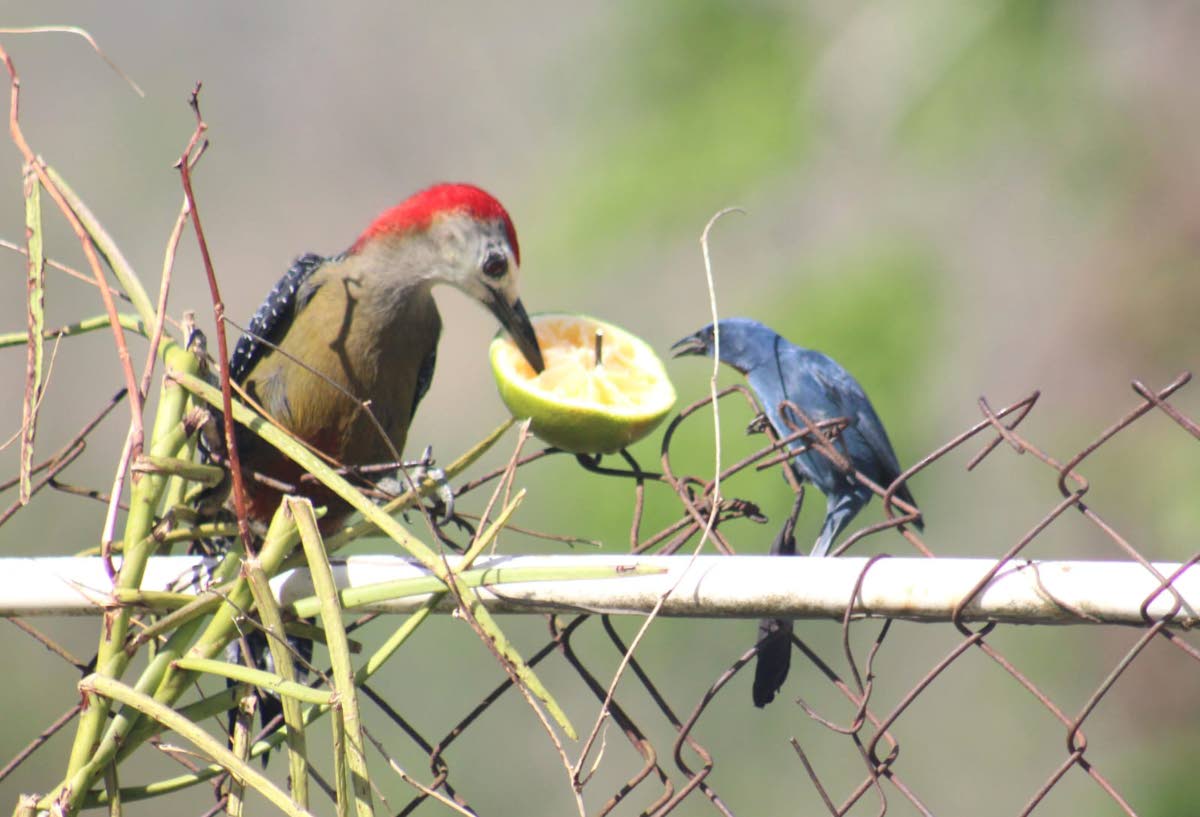 Birds eating oranges at Ahhh Ras Natango.
-
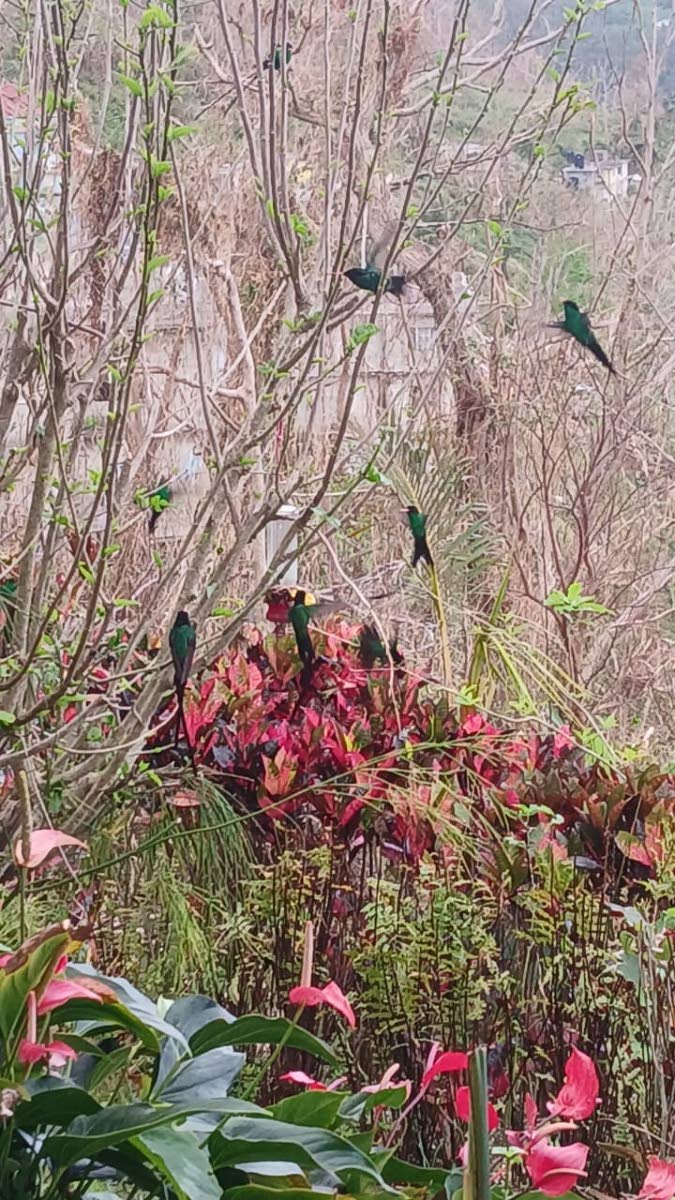 A small colony of birds eating together.
-
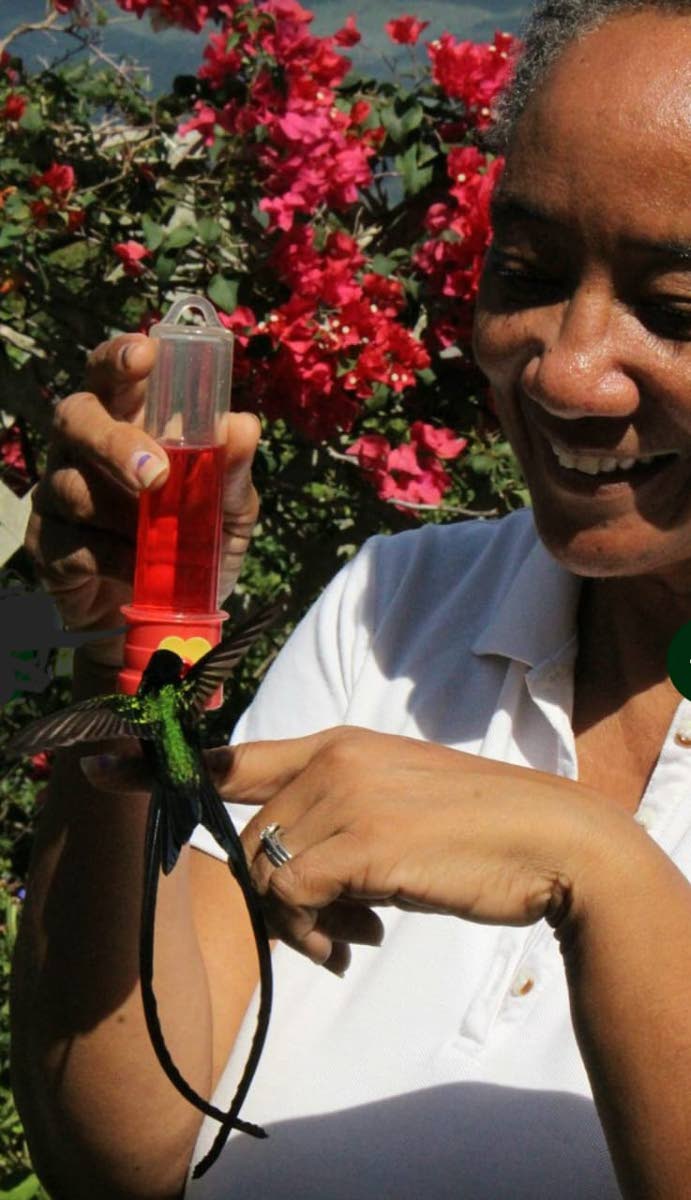 Tamika Williams, operator of Ahhh Ras Natango, feeds a bird.
-
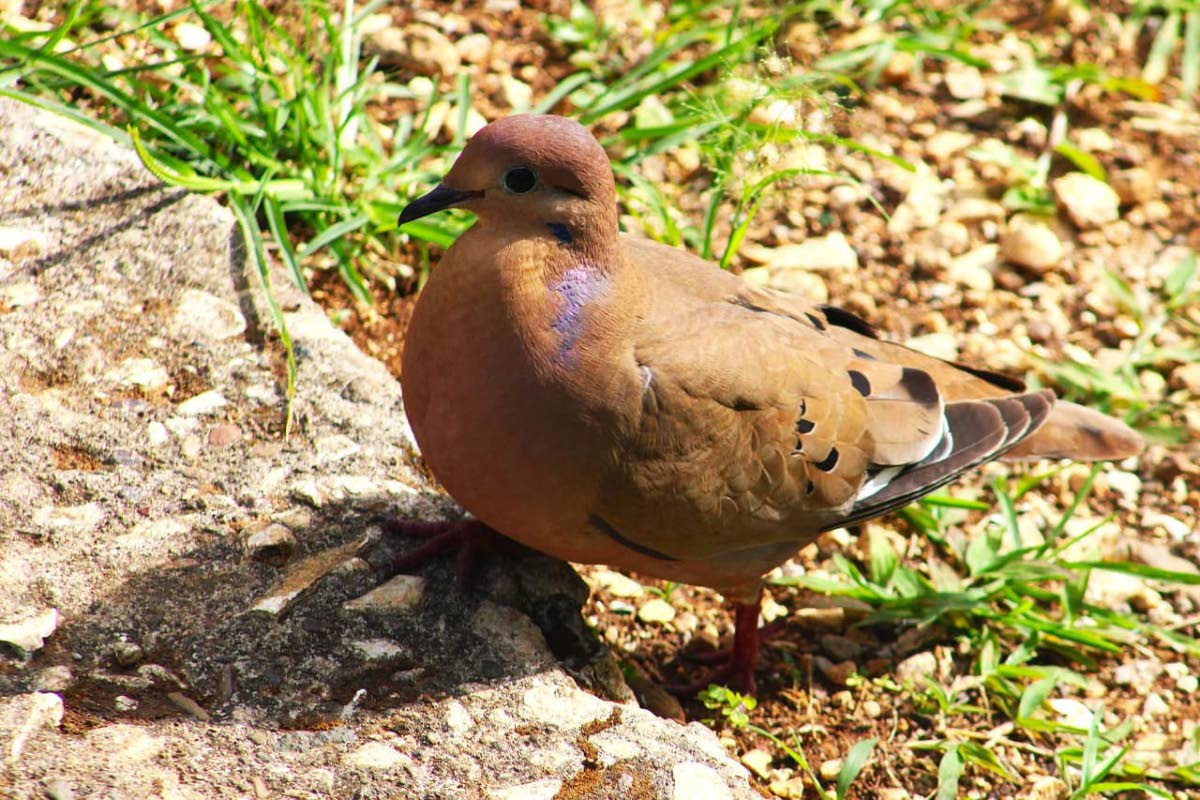 A pea dove.
-
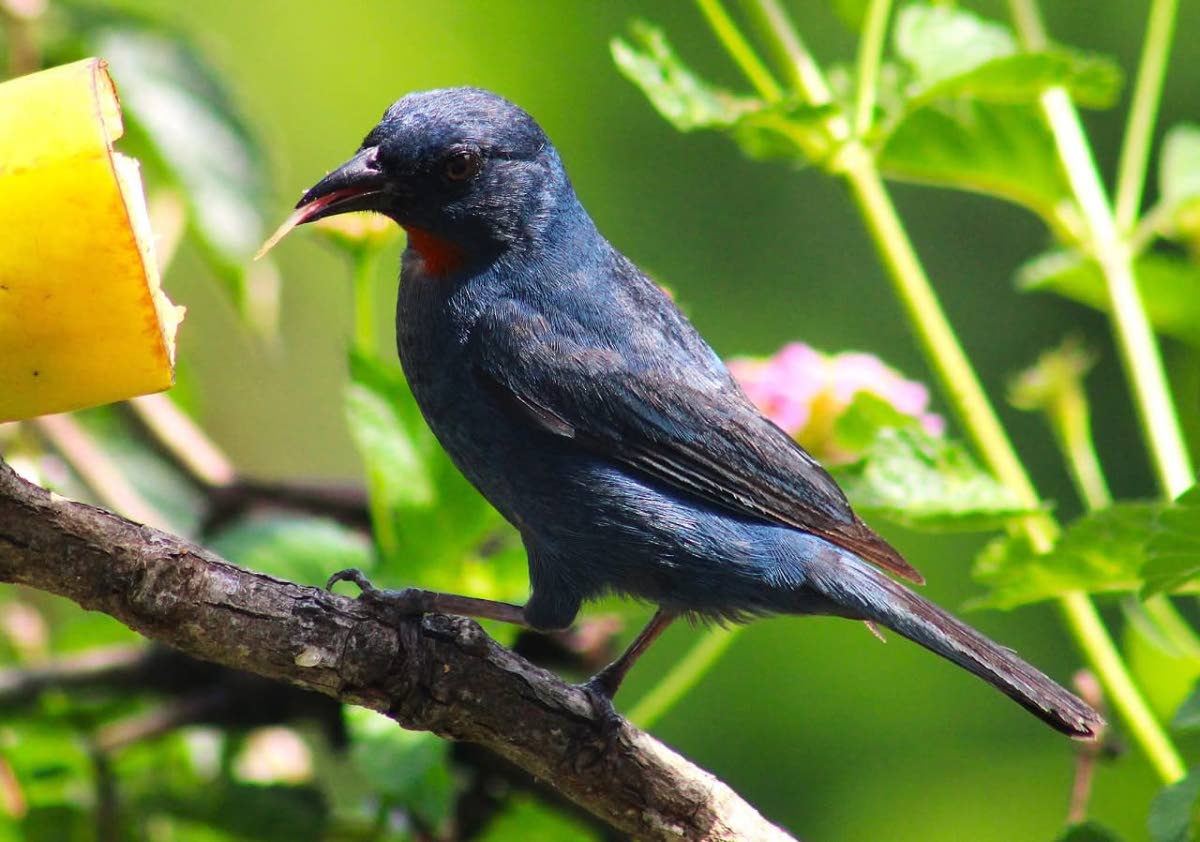 Jamaican endemic male orangequit feeding off a ripe banana at Ahhh Ras Natango.
-
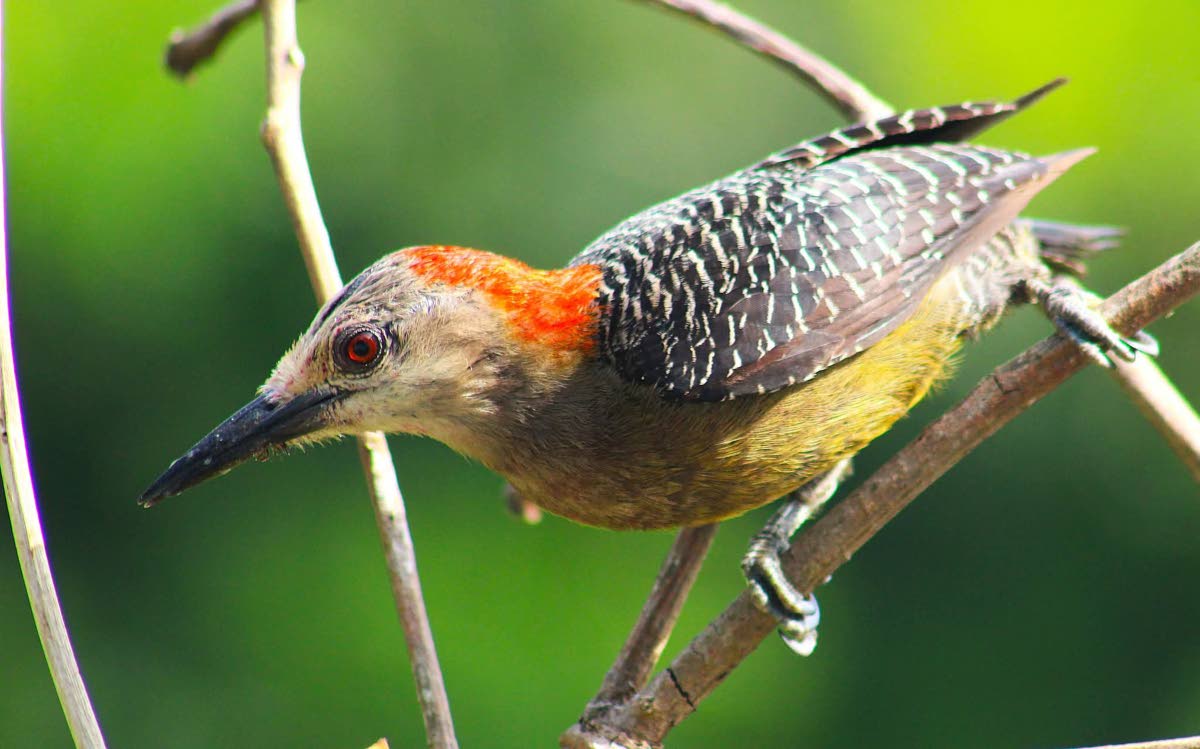 An endemic Jamaican woodpecker feeding at Ahhh Ras Natango Art Gallery and Gardens in upper St James.
-
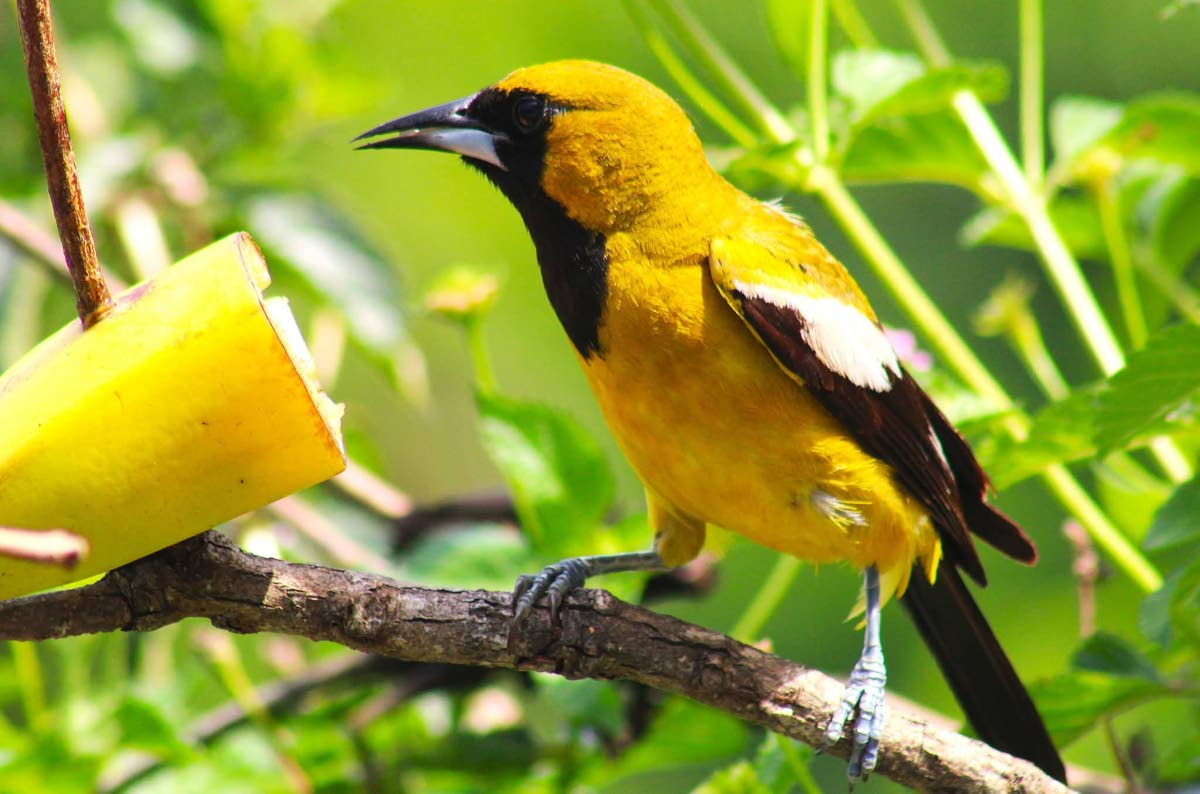 An endemic Jamaican Oriole feeds off the ripe banana provided by Ahhh Ras Natango.
WESTERN BUREAU:
Ten months after Hurricane Melissa devastated her tourism business, Tamika Williams is spending up to $10,000 a week feeding more than 150 birds that sought refuge at Ahhh Ras Natango Gallery and Garden.
Sometimes, the sacrifice means denying herself.
“I buy one finger of banana for $250. Sometimes I can’t, so I buy bananas and I don’t eat because it’s for them,” Williams told The Gleaner.
The birds arrived in extraordinary numbers immediately after Melissa ripped through western Jamaica, destroying hundreds of trees at the family-run attraction in Camrose, high in the hills overlooking Montego Bay.
What Williams witnessed then is now being echoed by scientists at the National Environment and Planning Agency (NEPA), who say Melissa caused bird deaths and displacement, leaving survivors confronting severe food shortages and destroyed habitats.
Ricardo Miller, NEPA’s coordinator for the Fauna Ecosystems Management Branch, said the hurricane also triggered unusual behaviour among birds desperately searching for food.
He singled out the bald pate, or white-crowned pigeon, a tree-feeding bird that began coming to the ground, entering yards, and visiting seeded fields after the hurricane.
Williams had a front-row seat to that upheaval.
“The day before the hurricane and during the hurricane, the silence was deafening. There was not a sound of a bird, and there are always birds here,” she recalled.
Then came the morning after.
“We were inundated, flooded with birds,” Williams said.
“Every bird you could think of.”
Most startling were the hummingbirds.
Normally territorial and rarely seen congregating in large numbers, Williams said they descended on the property by the hundreds.
“They were swarming like bees.”
The Williams family had fed birds long before Melissa and already had hummingbird feeders around the property. But this was different.
With trees stripped of fruit, seeds, flowers and nectar, birds that would normally remain high in the canopy or keep their distance from humans ventured closer in search of food.
Among them were bald pates and Jamaican crows.
Williams began putting out whatever she could afford.
Today, she estimates that she spends between $7,000 and $10,000 weekly on wild bird seed, sunflower seed, fruit and sugar for nectar. A bag of oranges alone can cost $2,000, she said.
And she continues despite her own financial uncertainty.
Melissa dealt a devastating blow to Ahhh Ras Natango. Williams said hundreds of trees were lost, garden structures and fencing were destroyed, and much of what the family had painstakingly created over nearly four decades disappeared in a single night.
But amid the destruction, the birds became an unexpected source of comfort.
“What the birds did for me after seeing the garden, 37 years of work, disappear in one night, the birds just kept me standing,” she said.
“They gave me a reason to get up in the mornings just to feed the birds.”
‘They know me’
The Jamaican crows even learnt her routine.
“If I was late coming down, they would come by the window and make the noise, like, ‘Come feed us, come feed us, come feed us’.”
She describes caring for them as therapy.
“They know me. They follow me.”
Initially, however, not everyone understood.
Williams said some members of the surrounding community questioned why she was feeding birds when families were themselves struggling after the hurricane.
“My community looked at it, at first, like I was giving to the birds and not giving to the children,” she recalled.
Her response was that the survival of birds, insects and other pollinators is intrinsically connected to the recovery of people.
“If the birds and the bees don’t survive ... everything we eat – every fruit tree, every flower – without birds, bees, insects and pollinators, there is no food,” she said.
“The quicker they recover is the quicker we recover.”
That concern has now taken Williams beyond feeding the birds.
She disclosed during NEPA’s Hunters’ Forum last Thursday that she had been raising concerns with the agency since April about proceeding with the 2026 bird-shooting season, arguing that Jamaica’s battered ecosystem should be allowed a year to recover.
Williams, who describes herself as a birder and environmentalist rather than a hunter, likened the situation to allowing agricultural land to lie fallow.
“You have to allow things to rest,” she told the forum.
She questioned whether the return of greenery across western Jamaica was being mistaken for genuine ecological recovery, pointing to the continuing absence of the mature tree canopy that provided food and habitat before Melissa.
Miller himself acknowledged that distinction.
While vegetation in the hurricane-ravaged west regenerated surprisingly quickly, he cautioned that a landscape becoming green again did not mean the impact on birds and other wildlife was over. Regrowing trees may not yet be fruiting or providing the resources animals need to survive.
NEPA’s surveys also produced anecdotal evidence of birds moving out of the devastated west.
Miller said species normally associated with the Cockpit Country had been detected in St Catherine and Portland, in areas where they had not been recorded during approximately two decades of monitoring.
Find a middle ground
Williams questioned whether Jamaica may eventually look back at the 2026 shooting season and conclude that the birds should have been given another year.
At the same time, she stressed that she does not see the debate as hunters against environmentalists.
“I am not a hunter. I am a birder. I photograph birds and I feed birds,” she said. “But we have to find a middle ground where we respect the other person’s view.”
The Natural Resources Conservation Authority ultimately approved a shortened season with significant restrictions, including a prohibition on shooting bald pates throughout Trelawny, St James, Hanover, Westmoreland and St Elizabeth.
Williams’ home in south St James also falls within one of four newly established areas in western Jamaica where no bird hunting will be permitted this season.
The flora and fauna are slowly returning to Ahhh Ras Natango. Moringa and starfruit trees are blooming again, and other plants are beginning to provide nectar and food.
Williams has noticed that some birds are becoming less dependent on her.
However, the feeding continues every morning and evening.
Williams estimates that more than 150 individual birds may pass through the property on a given day. More significantly, she says many of Jamaica’s 28 endemic bird species can be found living freely there.
The hurricane has also transformed the relationship between the birds and humans.
Birds that visitors previously needed binoculars to observe high in the trees now venture within a few feet of them.
“There is a trust that I get from the birds,” Williams said. “They trust this space. So this is, for want of a better word, their sanctuary.”
One female Jamaican orangequit has become particularly special after it flew into a window and fell to the ground. Williams and her son, Ayale, picked it up, fed it and nursed it until it recovered.
Now, she said, whenever the bird returns, it comes unusually close.
The growing bird population has inadvertently become another attraction at a property already known internationally for its gardens, art, spectacular views and intimate interaction with the Williams family.
The irony is difficult to miss.
At a time when Williams, her husband, artist Ian ‘Ras Natango’ Williams, and their son have been struggling to restore the attraction and questioning whether they can afford to continue, Ahhh Ras Natango has received one of the biggest endorsements in its history.
The small attraction was recently placed at the top of a global ranking highlighted by AAA Club Alliance, based on an analysis of positive Tripadvisor reviews.
For Williams, the recognition may help focus attention not only on the attraction, but also on something Hurricane Melissa has taught her not to take for granted: Jamaica’s extraordinary natural environment.
“What I hope to get from the accolades now is the attention that it brings to our flora and our fauna,” she said.
And while Williams speaks about the birds as though she is responsible for saving them, during one of the most difficult periods of her life, the relationship has worked both ways.
“I depend on them,” she said. “They are therapeutic for me.”
janet.silvera@gleanerjm.com