‘We are not struggling’ - Schools see strategic success as they hold out against drought
Loading article...
-
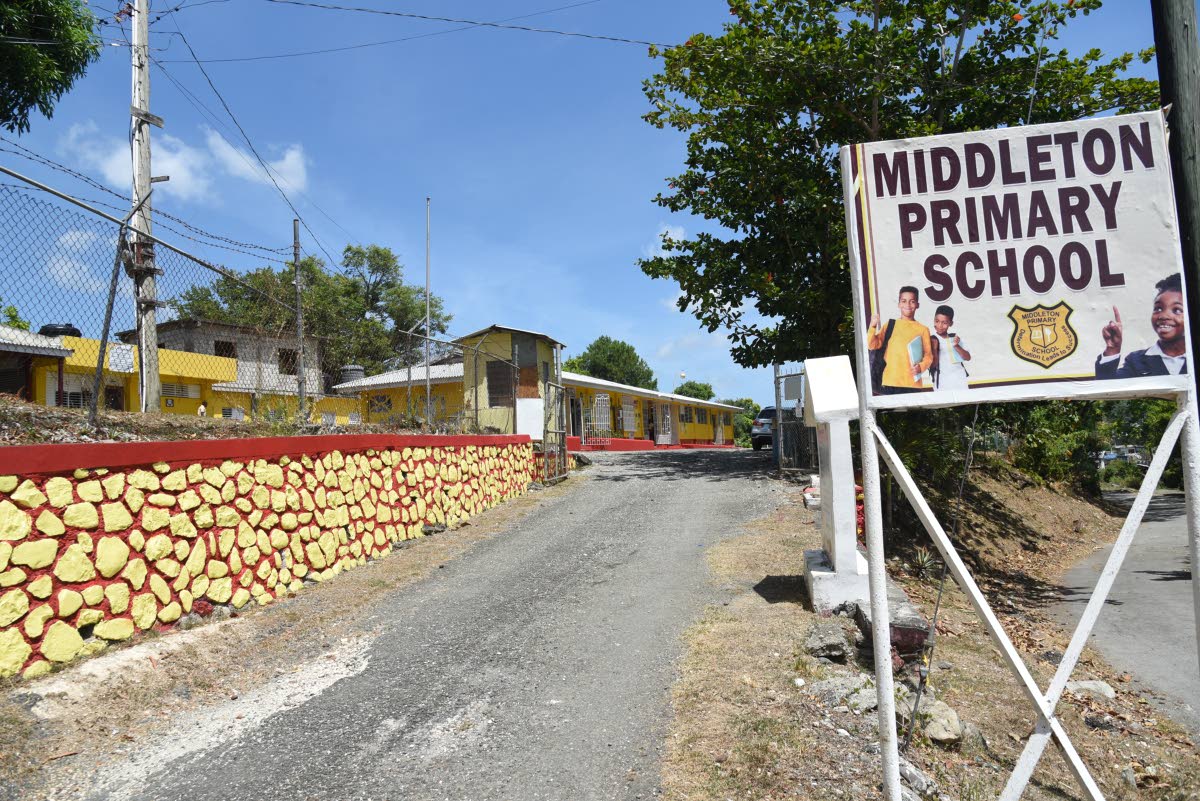 Middleton Primary School in St Thomas.
-
 Icelyn Taylor, principal at the Whitehall Primary School in St Thomas, says her school has no water problem but sections of the wider community do.
-
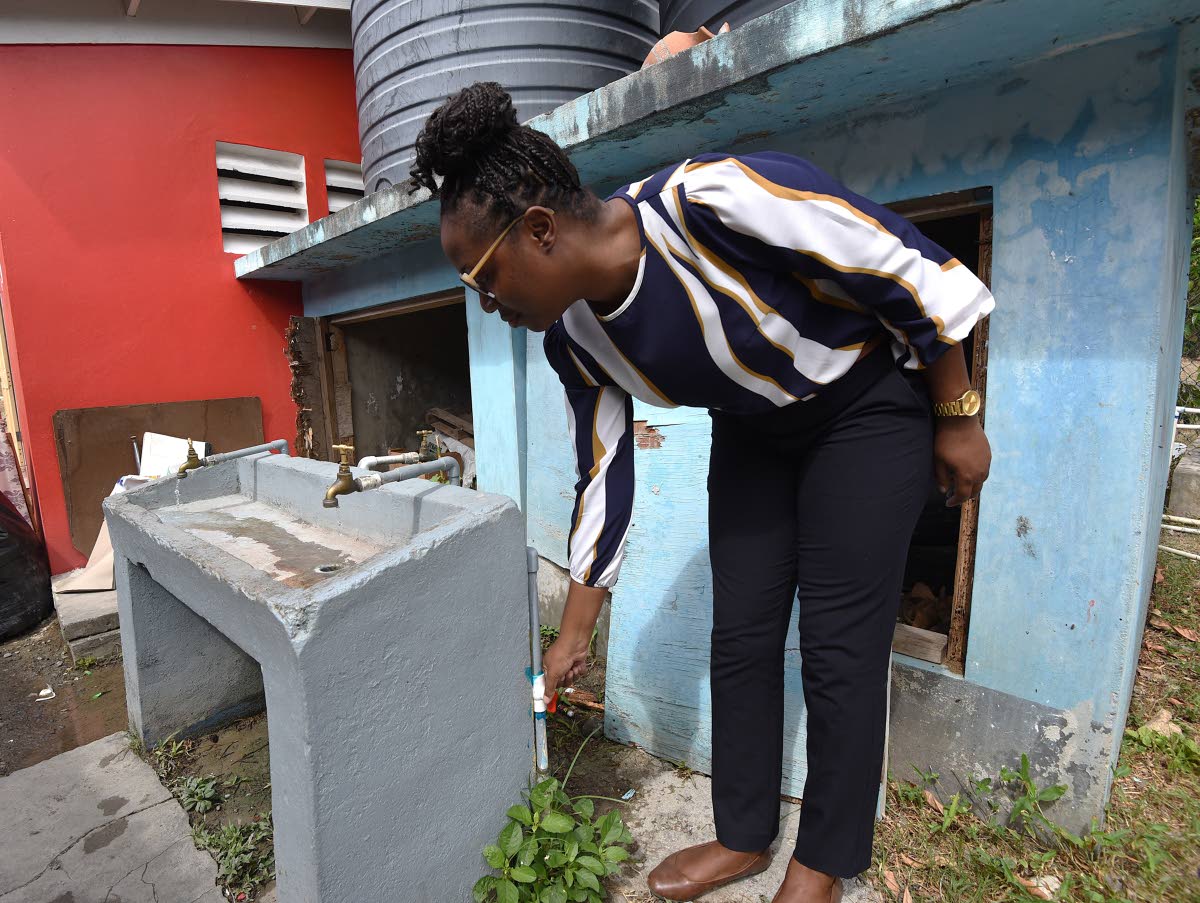 Cris Ann Francis, the acting principal of Springfield Primary School in St Thomas, turns on a lock off valve that was installed to prevent students from wasting water at the school.
-
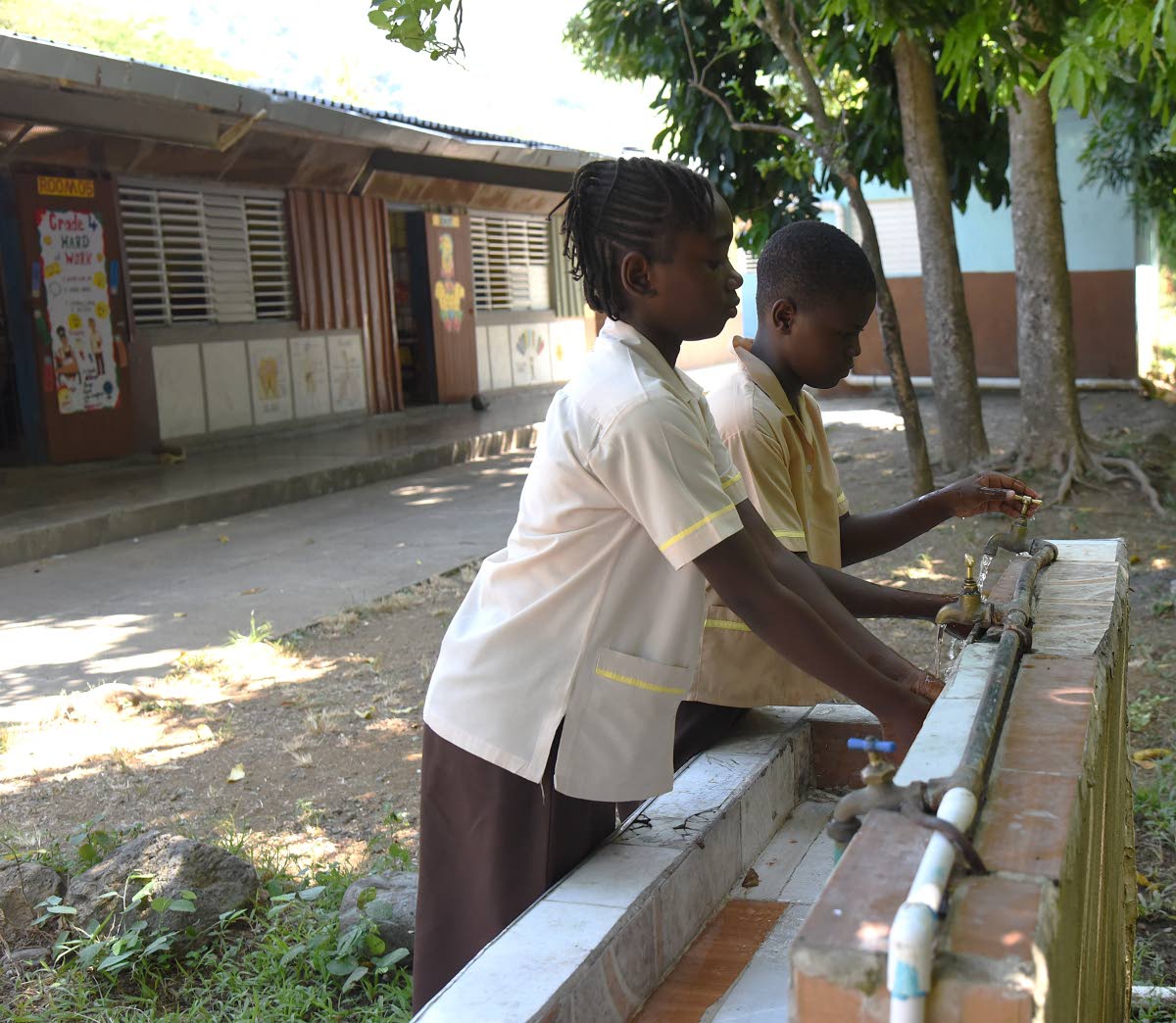 Shenece Paul (left) and Makonen Millwood (right), grade-five students at Bethesda Primary School in Llandewey, St Thomas, are able to wash their hands despite limited water at the school.
The once-lush green lawn at the front of Spring Garden Primary and Infant School in St Thomas is now a deep brown. At neighbouring White Hall Primary School, vegetation on the school grounds has dried up, presenting stark evidence of the drought now plaguing the island.
However, despite being in one of the most severely impacted parishes, principals at both institutions say they are managing well and that water shortages have not yet caused any major disruptions to their operations.
“We are not struggling,” Principal of White Hall Primary, Icelyn Taylor, told The Sunday Gleaner. “I don’t think we are suffering, yes the plants are dried (up), but when it comes to domestic use of water, I don’t see us having any problem.”
She said water is supplied to the school via the National Water Commission’s (NWC) White Hall facility, which also supplies other communities, including Soho, York and Seaforth.
According to the principal, the school generally has water “24/7”.
However, in the event that the supply is shut off, it relies on tanks with a total storage capacity of 1,600 gallons to meet the needs of its 88 students and staff members.
Cris Ann Francis, acting principal at Spring Gardens Primary and Infant School, said the school has four 1,000-gallon tanks on campus that cater to the needs of its 79 students and staff members.
She said water is trucked to the school by the NWC, which has so far been very cooperative.
“We have had our relationships with the trucking persons, and I think we have about two or three of them living in the community. One has a child enrolled here,” she said.
measures to conserve water
Francis told The Sunday Gleaner that she has also taken measures to conserve water by implementing strict monitoring at the school’s main pipe.
“We recently put a turn off at the main cistern and, the janitor, she supervises the students at the lunch break and the break time period to ensure that they are not wasting the water,” she said.
Stating that she and her colleagues “know their way around the water challenges”, the principal said the effect of the drought is mainly seen in the price of produce she buys for the school’s canteen and in the unrelenting heat.
“We now have to take them in batches (produce), we couldn’t get our regular supply. She (supplier) would send some that she has, and then send the reminder of the order, because the drought is impacting her produce,” Francis said.
This forced the school’s administration to increase the cost of lunch from $300 to $350. Additionally, she said the school is hosting fundraising drives to purchase fans for the classrooms.
However, in the meantime, she said some teachers take students outside under trees for classes in the afternoon.
“I really do think we endure nonetheless, that’s what we are doing because we have to get the ball rolling in the end.”
The higher temperatures resulting from the drought are also a main concern for the principal of Middleton Primary in the parish, Jennifer Lawrence.
Describing the heat as “intense”, Lawrence said she is grateful for the regular trucking of water to her institution by the NWC to help ease the drought’s impact.
“So far it’s been pretty smooth because we get the support of NWC, in fact when we would have already had water taken to Middleton for the start up of school, they came in to check to find out if we have water, and having found just one container empty they filled it with water,” she said.
She said the school has six tanks on campus with varying capacities of 1,000, 800 and 600 gallons to meet the needs of its 50 students and 11 members of staff.
According to the principal, staff from the NWC even come on weekends to ensure there is water at the school and go above and beyond to ensure there is no wastage.
“We don’t seriously have a problem when we make requests for water,” she said. “They even mend our pipes, sometimes they come and they see broken pipes, they even fix it,” she said.
“It’s a priority, and they have been treating and seeing schools as a priority,” she declared.
critical facilities
The Government announced earlier this month that it has allocated $150 million to the NWC to provide water trucking to schools, health centres, hospitals and other critical facilities, including police stations, particularly those serving as places of detention, to alleviate the impact of the drought.
Another $200 million was channelled through members of parliament (MPs) to provide assistance in their constituencies, while $150 million will be distributed among municipalities to help communities outside the NWC’s service network.
Education Minister Senator Dana Morris Dixon also told journalists recently that the ministry has engaged private contractors to truck water to schools not supplied by the NWC.
“The way it works is that the principal works with the regional office to indicate where they may be running low on water, and then the ministry prioritises it,” she said.
However, Opposition Spokesman on Education, Damion Crawford, has criticised what he said is the centralisation of decision-making within the Government.
“The schools in some cases have to be contacting the ministry directly when there could have been an allocation to MPs specific for schools,” he said during a press conference last week.
Crawford called for greater involvement of MPs in water distribution.
“We’re grateful for small allocations for farmers, and a small allocation that has been made for communities. However, there has been no assessment through the MPs for them to indicate the areas that have been affected, the schools, the schools that exist there, the numbers of students that are present… and so there are bottlenecks within the ministry,” he said.
Meanwhile, Verona Barrett Brown, principal of Bethesda Primary School, located in the rural community of Llandewey in the parish, told The Sunday Gleaner that she has experienced delayed responses to NWC water requests since the start of the new school year.
“The NWC is supposed to be giving us water. When the water is not available, I make a call, but the truth is they don’t always respond promptly,” she said. “NWC is supporting everybody, so the truth is, we can’t expect to call them and they are here immediately.”
However, when that happens, water is pumped onto the campus from a nearby agricultural pipeline to wash hands and flush the school’s toilets.
The potable water trucked by the NWC is stored in three tanks on the compound, each with a capacity of more than 500 gallons.
Barrett Brown said the school’s 85 students are also encouraged to bring drinking water to school as a conservation measure.
She said water conservation is critical to ensure that the school is not forced to close.
“We don’t want to close school because our children are not always performing at the best that we want them,” she said. “And the truth is we can’t go online as we’d want because some students do not have the devices and internet connectivity.”
sashana.small@gleanerjm.com