Fight for survival continues as J’can iguana recovery reaches 1,000
Loading article...
-
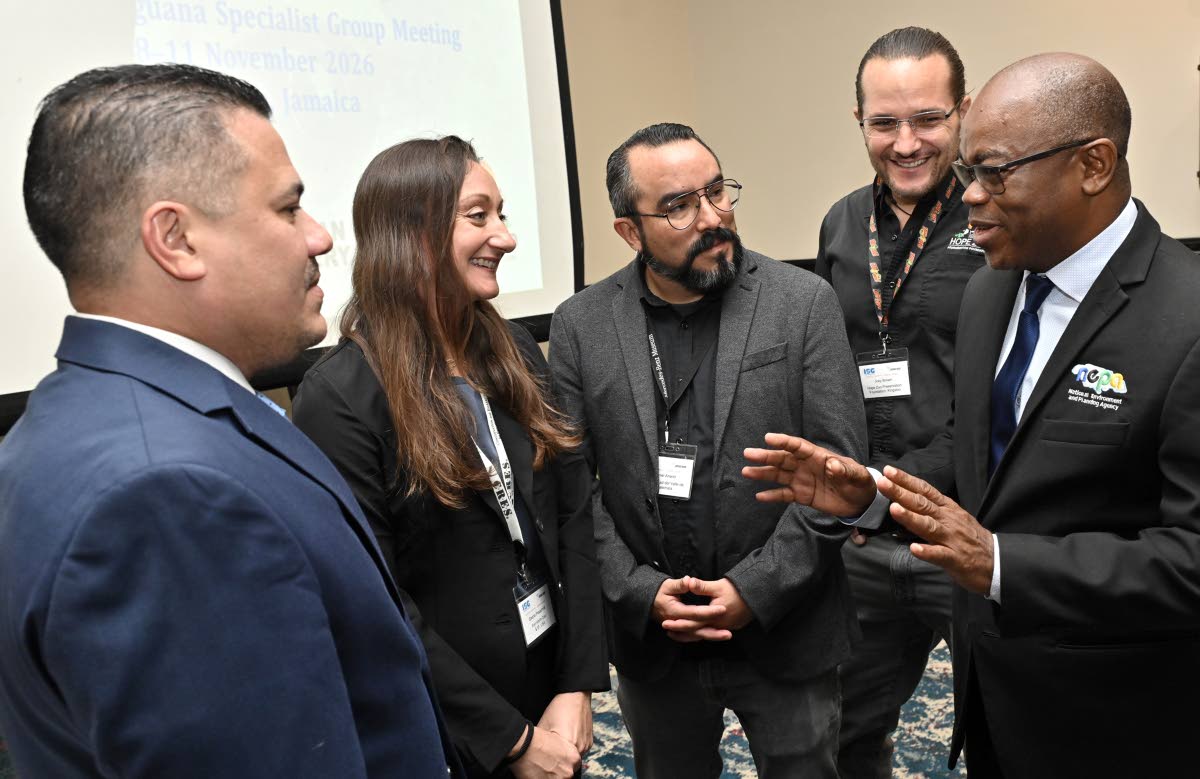 Leonard Francis(right), CEO of the National Environment and Planning Agency, chats with (from left) Environment Minister Matthew Samuda; co-chairs of the Iguana Specialist Group Dr Stesha Pasachink and Dr Daniel Ariano-Sanchez; Joey Brown, of the Hope Zoo Preservation Foundation, at a conservation meeting and workshop at The Jamaica Pegasus hotel in New Kingston on Monday. Photo - Rudolph Brown/Photographer
-
Leonard Francis(right), CEO of the National Environment and Planning Agency, chats with (from left) Environment Minister Matthew Samuda; co-chairs of the Iguana Specialist Group Dr Stesha Pasachink and Dr Daniel Ariano-Sanchez; Joey Brown, of the Hope Zoo Preservation Foundation, at a conservation meeting and workshop at The Jamaica Pegasus hotel in New Kingston on Monday. Photo - Rudolph Brown/Photographer
-
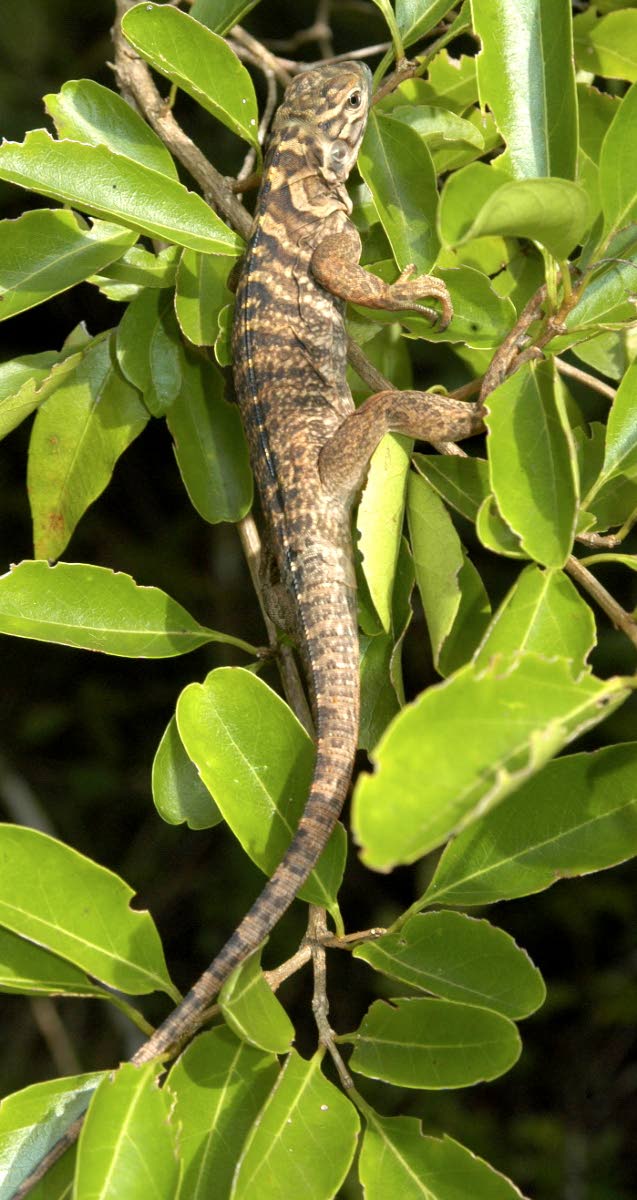 This October 2005 Gleaner photo shows a seven-day-old Jamaican iguana resting in a tree in Hellshire Hills, St Catherine. Photo - File
International conservation experts and local partners will gather in Hellshire Hills, St Catherine, on Saturday to release the 1,000th Jamaican rock iguana raised at Hope Zoo to be returned to the wild.
The iguanas are cared for at the zoo until they grow large enough to protect themselves from predators, before being released into their natural habitat. The milestone marks a major achievement in the effort to save a species once feared extinct.
“This is what I call resilience, hard work and collaboration between all partners,” remarked Leonard Francis, chief executive officer of the National Environment and Planning Agency (NEPA).
He was speaking on Monday at the annual meeting of the International Union for Conservation of Nature, the Species Survival Commission and the Iguana Specialist Group (ISG) at The Jamaica Pegasus hotel in New Kingston.
The formation of the ISG stems from the 1990 rediscovery of the Jamaican rock iguana and the subsequent workshop held in Kingston in 1993 to address its recovery. This was later formalised through the establishment of the Jamaican Iguana Recovery Group, chaired by NEPA.
After more than 30 years, the wild population of the Jamaican rock iguana has grown, largely due to the head-start programme at Hope Zoo in St Andrew.
Programme Officer Tandora Grant, who has worked with the Jamaican iguana since its rediscovery, lauded the milestone, and expressed delight at being a part of the team.
Joey Brown, general curator at Hope Zoo, said he was pleased with the result of the partnership.
“It’s an incredible accomplishment to see, over the last 30 years, local and international stakeholders come together to help save this one unique iguana species. It’s an amazing accomplishment,” he said.
Meanwhile, conservation biologist Damion Whyte described the achievement as a “big deal” for Jamaica.
“It is a big milestone to know that we in Jamaica do something right,” he said.
The Jamaican rock iguana is threatened primarily by invasive predators, such as mongoose and cats, and is only found in the Hellshire Hills.
But even as the ISG celebrates the 1,000th reintroduction milestone, Francis noted that the survival of the Jamaican rock iguana is not yet assured.
“The continuing presence of invasive predators, precious and critical habitats, competing land demand and the growing impact of climate change remind us that conservation success ... should never be mistaken for the completion of our responsibility,” he said.
“The challenge before us, therefore, is not simply about maintaining the progress already gained, but to establish the conditions and processes under which the species can thrive in the wild over the long term. This, if managed properly, will reduce the dependence on human intervention,” he added.
He noted that it was encouraging that this year’s meeting will also include the development of a conservation action plan for the next phase of the iguana recovery programme.
Meanwhile, highlighting the programme as a globally recognised conservation success story, Minister of Environment Matthew Samuda said the achievement marks years of coordinated research, habitat management, captive rearing, predator control, and species reintroduction.
“Each iguana returned to its natural habitat represents years of scientific effort, careful management, and the unwavering commitment of individuals and institutions who refused to accept extinction as the final chapter in this species’ history,” he said.
There are two components to the programme – the protection, monitoring and managing of the iguanas in Hellshire Hills, and the head-start element at Hope Zoo.
Samuda noted that field teams currently monitor more than 280 live predator traps and have removed more than 1,500 predators from the core of the iguana habitat over the period, while the head-start initiative at Hope Zoo cares for approximately 300 juvenile iguanas.
He stressed the Government’s commitment to programmes like these, noting that biodiversity conservation is central to Jamaica’s wider environmental and climate resilience agenda.
“Though we have had significant fiscal challenges post-hurricane Melissa, in our current Budget call process, ... I can assure conservationists and those within the environmental protection and planning agencies, like our Forestry Department [and the] Fisheries Division, that there [are] significant increases in provisions for conservation and restoration work in the coming fiscal year,” he said.
sashana.small@gleanerjm.com