Unravelling Jamaica’s rat lungworm puzzle
Loading article...
-
 Dr Marco-Dean Brown. Photo - Contributed photos
-
Dr Marco-Dean Brown. Photo - Contributed photos
-
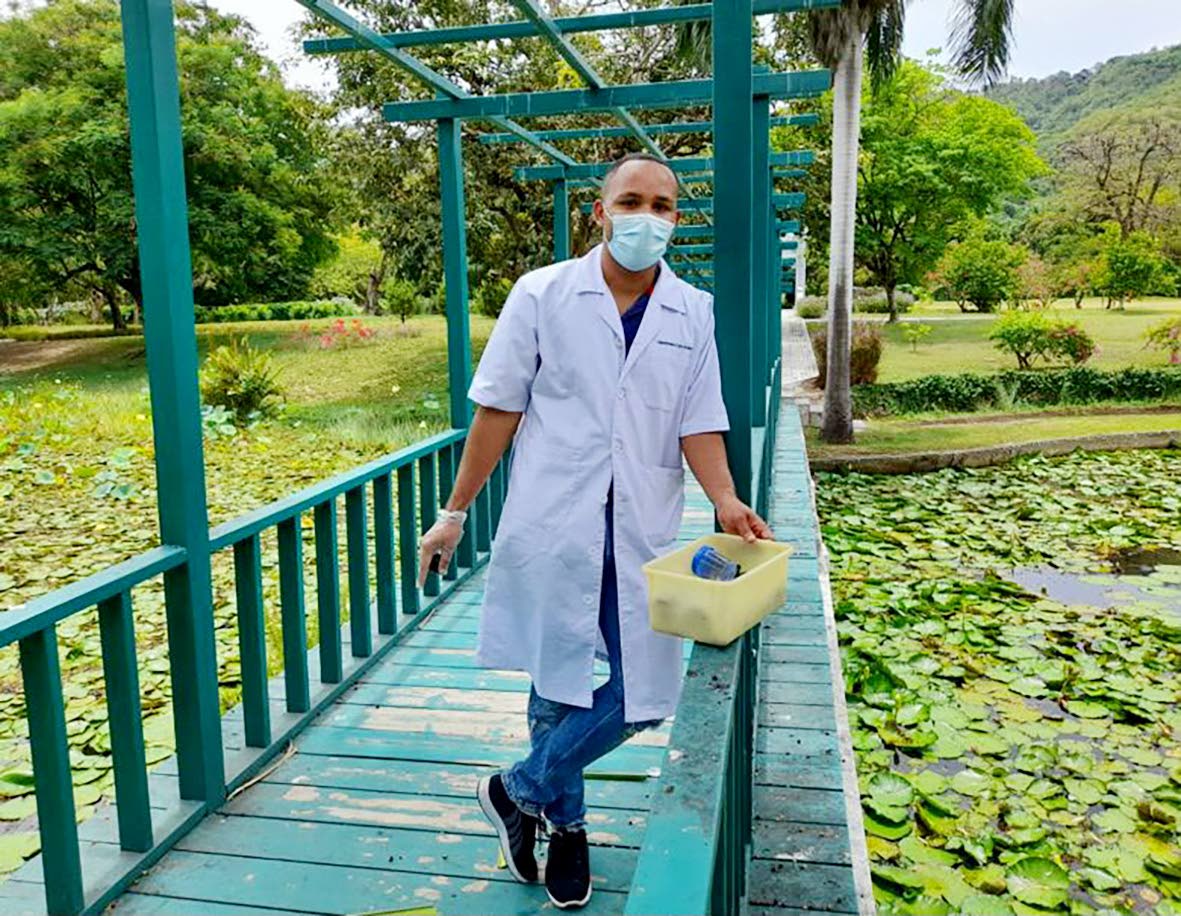 Dr Marco-Dean Brown conducts scientific research as part of his work in parasitology. Photo - Contributed photos
-
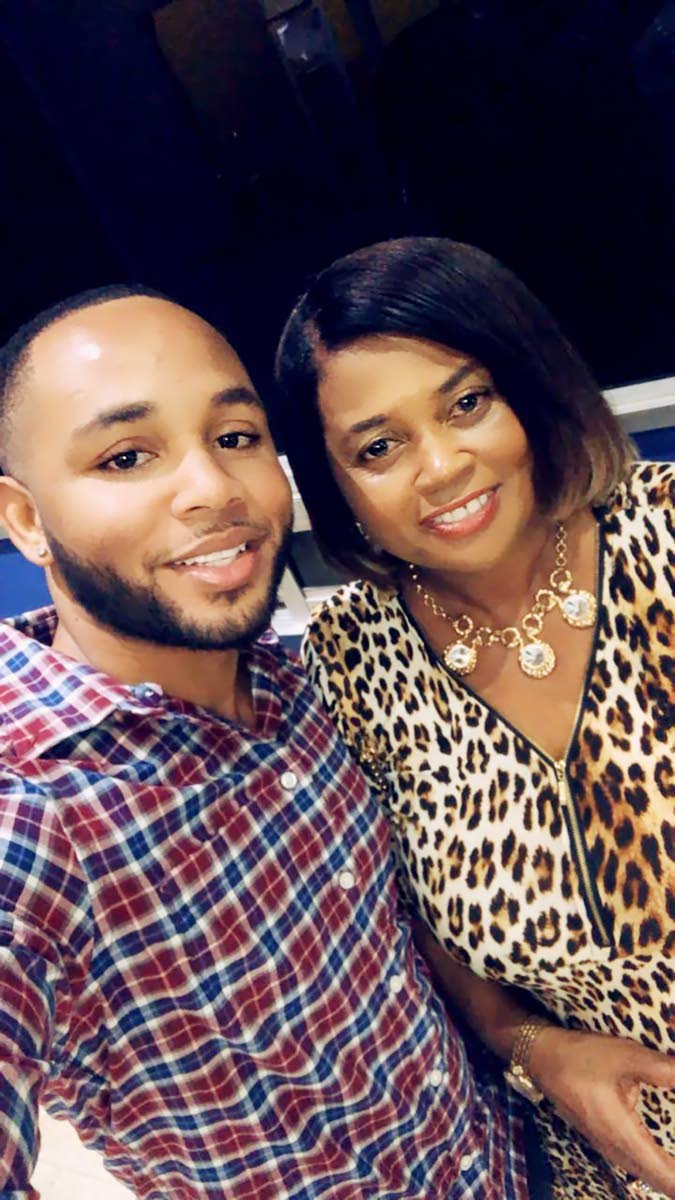 Dr Marco-Dean Brown shares a cherished moment with his late mother, Donna-Marie Erskine, who remained a constant source of encouragement throughout his doctoral journey. Photo - Contributed photos
A fascination with the hidden world of parasites has taken Dr Marco-Dean Brown from an undergraduate classroom at The University of the West Indies (UWI), Mona, to discoveries that are expanding scientific understanding of the rat lungworm in Jamaica.
His doctoral research identified 13 previously unrecognised species capable of carrying Angiostrongylus cantonensis, including seven snail species and an invasive flatworm. Eight of the findings represented global first records.
Brown, who was recently awarded a PhD in Zoology with a focus on Parasitology from UWI, Mona, did not grow up knowing he would become a scientist studying parasites.
His early interests centred on health, the human body, and disease. Parasitology, molecular biology, and the complex relationship between humans, animals, and the environment were worlds he discovered much later.
“Growing up, I always had an interest in the health sciences. I was interested in health and the idea of understanding the human body and disease, but I did not grow up knowing that I would become a parasitologist,” Brown said.
He believes that his experience highlights the importance of exposing young people to career possibilities beyond the professions they traditionally encounter.
“When you are growing up, you can only aspire to careers and fields that you know exist. You may know about doctors, nurses, teachers, or lawyers, but you may not necessarily know that there are scientists who study parasites, infectious diseases, molecular biology, epidemiology, or the interactions between human health, animals and the environment,” Brown said.
Wider view
It was his undergraduate experience at the UWI that opened that wider world. Brown completed a Bachelor of Science in Experimental Biology in 2015, and it was during his studies that an undergraduate parasitology course changed the course of his career.
His lecturer, Professor Ralph Robinson, presented parasitology not simply as a body of knowledge to be memorised but as a discipline connected to real-world health challenges.
“He had a remarkable way of putting students in the role of practitioners. Rather than simply learning facts from a textbook, we were challenged to think like scientists and health professionals, to ask questions and consider how parasitology operates in the real world,” Brown said.
The approach resonated with him because it linked global health concerns with challenges closer to home. Brown began to recognise that Jamaica and the wider Caribbean still had important scientific questions requiring local research, local data, and scientists willing to investigate them.
That realisation eventually led him to one of Jamaica’s most intriguing parasitological stories: Angiostrongylus cantonensis, commonly known as the rat lungworm.
Brown’s interest in the parasite was sparked by learning about the 2000 outbreak of eosinophilic meningitis among tourists who had visited Jamaica. The epidemiological investigation linked their exposure to a salad consumed during their stay while subsequent research established that A. cantonensis was present in Jamaican rats and molluscs.
“It immediately raised questions for me. How was the parasite being maintained in Jamaica? Which species were involved in its transmission?” he said.
Those questions became particularly compelling because of Jamaica’s biodiversity and the diversity of its terrestrial molluscs.
Transmission cycle
Researchers, including Robinson, Professor John Lindo, and Dr Cecelia Waugh, had already made important contributions to understanding the parasite in Jamaica. Their work identified infected rats and several molluscan hosts, laying an important foundation for subsequent research.
Brown, however, saw another question waiting to be answered: How many other species might be capable of carrying the parasite?
That question became the foundation of his doctoral research, which examined the molecular epidemiology of A. cantonensis in Jamaica, including infection levels, intermediate and paratenic host ranges, and environmental and biological factors influencing transmission.
The findings significantly expanded the known transmission landscape. Brown identified 13 previously unrecognised species capable of carrying the parasite, including seven snail species and an invasive flatworm. Eight of the discoveries represented global first records of A. cantonensis being detected in those species.
The findings provide a broader understanding of the animals that could potentially participate in the parasite’s transmission cycle in Jamaica.
Rats serve as the natural hosts in which the adult parasite lives. Snails and slugs acquire the parasite by ingesting rat faeces containing larvae, allowing it to develop into its infective stage.
Other animals can also act as transport, or paratenic, hosts by consuming infected snails or slugs.
“This creates a much more complicated transmission network,” Brown explained.
Among the animals that can serve as transport hosts globally are flatworms, frogs, crabs, and freshwater shrimp.
Humans are accidental hosts and can become infected through exposure to infective larvae, including through the consumption of raw or inadequately cooked infected snails and slugs, infected transport hosts, or contaminated raw produce.
The discovery of the 13 additional host species, therefore, adds important pieces to the Jamaican transmission puzzle. Brown was particularly struck by the findings involving the invasive flatworm, which carried a substantial number of infective larvae.
That observation raised important questions about the potential consequences of exposure to a host carrying a high parasite burden.
One of the defining features of Brown’s work is its One Health perspective. Rather than examining human disease in isolation, his research considers the interconnected relationship among humans, animals, and the environment.
“Human health does not occur in a vacuum. Our health is intricately connected to the health of animals and the environment in which we live,” he said.
Brown said studying rat lungworm requires looking beyond infected individuals and examining the broader system that creates opportunities for exposure.
His research identified climatic and biological factors associated with infection. Rainfall and moisture can influence the activity and abundance of snails and slugs while temperature can affect parasite development within hosts.
He cautions against assuming that climate change will automatically increase rat lungworm transmission everywhere.
“The relationship is much more complex, noting that changes in temperature, rainfall, vegetation, land use, and host distribution can alter the suitability of particular environments in different ways,” he said.
Deeply personal
Behind the scientific discoveries, however, Brown’s PhD journey was also deeply personal. He describes the doctoral process as one marked by uncertainty, failed experiments, methodological challenges, and periods when things did not go according to plan.
His greatest source of encouragement was his mother, Donna-Marie Erskine, to whom he dedicated his PhD.
“She was a selfless woman who gave everything she had to her family and was my constant source of encouragement throughout the journey,” Brown said.
His mother would call him about seven times a day to check on him and encourage him to continue. Those calls became part of his routine and helped him through difficult periods. Brown lost his mother towards the end of his PhD.
“In many ways, finishing it became less about the degree itself and more about fulfilling something we had started together,” he said.
For Brown, the PhD represents more than an academic qualification. It symbolises perseverance, purpose, his mother’s belief in him, and the potential for scientific research to address real-world problems.
He now hopes to build on his research by focusing increasingly on translating scientific findings into practical solutions for Jamaica and the wider Caribbean.
Brown believes the region needs stronger capacity to investigate its own health challenges using modern molecular, epidemiological, and ecological approaches.
That means developing laboratories, strengthening collaborations, mentoring young researchers, and creating opportunities for Caribbean scientists to investigate questions with direct relevance to their communities.
Zoonotic diseases, he argues, cannot be addressed effectively by a single discipline.
Researchers, public-health professionals, veterinarians, environmental scientists, and other stakeholders must work together to understand the connections between disease, people, animals, and ecosystems.
For Brown, that is the promise of the One Health approach. His message to young Jamaicans considering a career in science is equally direct:
“Do not underestimate what is possible simply because you come from Jamaica,” he said.
keisha.hill@gleanerjm.com