Schools tread water as swimming costs rise
Loading article...
-
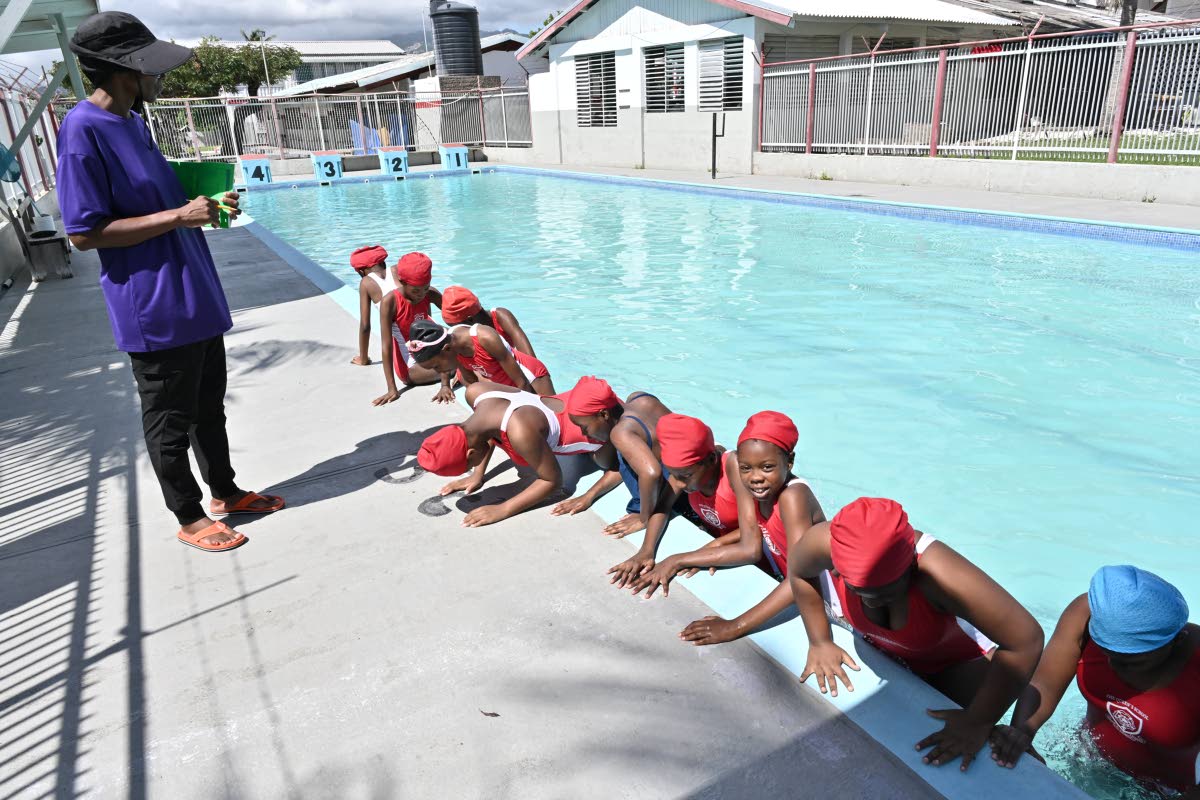 Georgina Boland conducting a swimming lesson at The Queen’s School in St Andrew last month. Photo - Rudolph Brown/Photographer
-
Georgina Boland conducting a swimming lesson at The Queen’s School in St Andrew last month. Photo - Rudolph Brown/Photographer
-
 Jennifer Williams, principal of The Queen’s School, said swimming has been a part of the curriculum for several years because the administration understands the importance of the skill. Photo - Antoine Lodge/Photographer
-
 Kafia Rapley, swim teacher and coach at Wolmer’s Girls’ School, wants to see more swimming facilities is schools across the island. Photo - Antoine Lodge /Photographer
-
 Georgina Boland, swim teacher at The Queen’s School, says the costs associated with private swimming lessons prevent many Jamaicans from developing their potential in the sport. Photo - Antoine Lodge/Photographer
-
 Rohan White, swim coach at St Andrew High School for Girls, believes learning to swim will always be a worthwhile investment. Photo - Antoine Lodge/Photographer
-
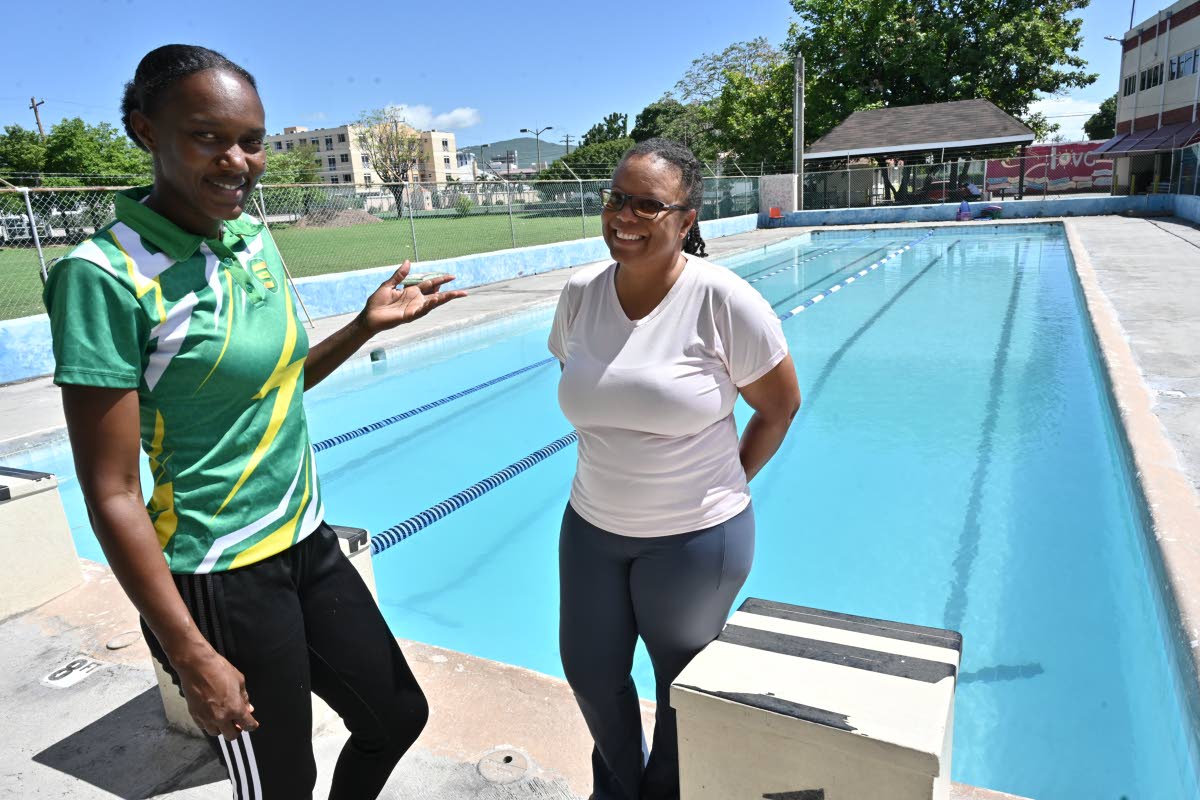 Paula Thompson (left), head of Physical Education Department at St Andrew High School for Girls, and swim teacher Kerry-Ann Munroe. Photo - Rudolph Brown/Photographer
Although it would be ideal for every school to have a pool, Major Desmon Brown, president of the Calabar Old Boys’ Association, believes the undertaking would be far too expensive.
“I am also the manager of the Independence Park Stadium complex, and the pool is the most expensive facility to operate. The schools just can’t afford it,” he said.
Calabar High School was the first high school in Jamaica to have a swimming pool, constructed when the school relocated to its Red Hills Road, St Andrew campus in 1953 with the boys helping to build it. The pool fell into disuse and disrepair leading up to the 1990s, with principal Sian Wilson noting that by 1995, it was no longer operational.
Wilson, who was speaking with The Gleaner upon her appointment in 2024, recalled swimming in Calabar’s pool back in the day when she visited the institution for socials after undertaking joint community projects. The pool is now an eyesore and is among the issues she said she plans to address.
“I was a little disappointed when I came to Calabar in 1995 and saw that the pool was no longer up and running and functioning,” she said then.
Several attempts by The Gleaner to get an update from Wilson were unsuccessful.
Brown also recalled learning to swim while attending the school in the 1960s, when swimming lessons were part of the physical education curriculum. As a boarder at the institution, he also had ample opportunity to hone his skills.
However, he noted that the pool having been closed for a couple of decades illustrates just how difficult and costly it is to maintain.
“When you look at the schools, and when you hear the other things that they have to pay for, the cost of running a school, I don’t see how the pool can be a high priority,” he reasoned.
In addition to the cost of building a pool, which can easily cost $5 million or more, a pool also requires daily maintenance, which involves frequent water testing and mechanical care.
The pool’s upkeep includes daily monitoring and adjustment of water chemistry, an efficient pump and filtration system, and measures to ensure the safety of the pool deck and surrounding areas.
Jennifer Williams, principal of The Queen’s School, said maintenance can amount to more than $80,000 per month.
“The reality is, it is expensive to maintain, so we have to incorporate [the cost] into the [auxiliary] fees,” she told The Gleaner, adding that a first-form student pays $35,000 in auxiliary fees.
The school inherited the pool, she explained, as the property was once home to a hotel.
Williams said the students are usually fascinated by the facility when they enrol at the institution. She added that swimming has been a part of the school’s curriculum for several years because the administration understands the importance of the skill.
“We try to allow our students to be well-rounded, so the basic information needed for swimming, they get it from first to third form,” she said.
Pool maintenance at the Wolmer’s Girls’ School costs approximately $100,000 per month, swim teacher and coach Kafia Rapley revealed.
Stressing that “swimming is not cheap”, she believes the costs associated with the activity could be cut significantly if there were more community pools for public use.
“We definitely do need funding for a lot more pools on the island. A lot of the pools are saturated in Kingston,” she said. “If we had more pools, then we’d have the opportunity to train more teachers and get people to swim.”
She said she is the only swim teacher at her school, noting a wider shortage of trained instructors.
Swim teacher at The Queen’s School Georgina Boland expressed a similar view. She noted that the costs associated with swimming prevent many people from learning the skill or discovering their potential in the sport.
“Let me tell you, we’d have so many more Alia Atkinsons,” she said, referring to the five-time Jamaican Olympic swimmer.
In 2014, Atkinson became the first black woman to win an individual World title and set several records during her career before retiring in 2021.
“Swimming tends to be very expensive for most persons in Jamaica because you have to pay for lessons, and most schools don’t have swimming facilities. So, in order for students at other schools to learn to swim, they would have to pay … and that is a hindrance for a lot of persons. They cannot afford it,” Rapley said.
She added that the “limited facilities is a challenge because it (a pool) can hold so many persons and no more”.
The cost of installing and maintaining a swimming pool is one of the main reasons St Elizabeth Technical High School currently does not have one, principal Keith Wellington told The Gleaner.
“A pool would be good, especially for a school that is so heavily involved in other sporting activities. In terms of treating injuries and so on, a pool would be an asset,” he said.
Wellington noted that the school has its own well, so “water wouldn’t be a problem”. But even though he understands the value of such a facility, he said it is not a priority – at least, not right now.
Potential liability
Lynton Weir, principal of Old Harbour High School in St Catherine, said he has been advocating for the construction of a swimming pool at the institution for several years. But rather than costs being the immediate concern, the school’s stakeholders were uneasy about potential liability in the event of an accident.
“My board did not buy into it; they were very fearful about drowning and all of that. But I think it is a life skill that we should teach every student,” he said.
Rapley, in the meantime, noted that swim teachers and coaches generally offer lessons outside the classroom. But unlike other sports, swimming lessons can cost up to $3,000, and parents often see the activity as a luxury rather than a necessity.
However, noting that there are many coaches charging varying rates, Rohan White, swim coach at St Andrew High School for Girls, told The Gleaner that learning to swim will always be a worthwhile investment.
“Which would you rather? Pay probably $2,000 per session and know that you’re able to go to the beach and enjoy it with your friends, or don’t pay the $2,000 and you go to the beach and you just have to sit down and watch everybody swim? Or are you bold enough to go in and find yourself in difficulty and you can’t help yourself?” he asked.
sashana.small@gleanerjm.com