US Senate rejects attempt to end Trump’s blockade of Cuba
Loading article...
-
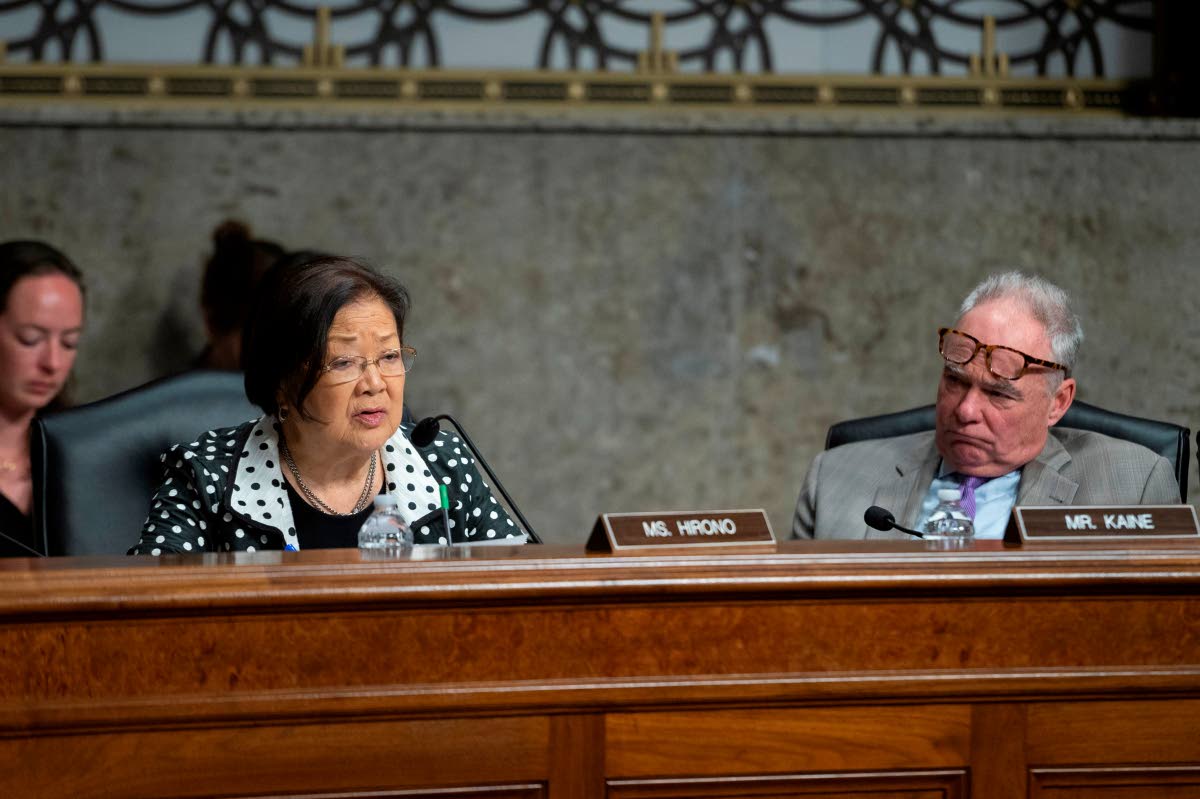 Senator Mazie Hirono, D-Hawaii, left, questions a witness as Senator Tim Kaine, D-Va., right, looks on during the Senate Committee on Armed Services hearing on Capitol Hill in Washington, Tuesday, April 28, 2026. (AP Photo/Cliff Owen)
-
 A classic American car carries tourists past the US Embassy in Havana, Monday, April 20, 2026. (AP Photo/Ramon Espinosa)
WASHINGTON (AP) — Senate Republicans rejected legislation from Democrats on Tuesday that would have required President Donald Trump to end the US energy blockade on Cuba unless he receives approval from Congress.
The vote on the war powers resolution showed how Republicans continue to stand behind Trump as he acts unilaterally to exert American force in a range of global conflicts, including Venezuela, Iran and Cuba — one of the US's closest neighbours yet a longtime adversary.
Democrats have repeatedly forced votes on legislation to put a check on the president’s ability to deploy military force in those conflicts, but none have succeeded.
Tuesday’s vote was the first pertaining to Cuba and would have forced the president to get approval from Congress before launching any attacks on the island nation.
To dismiss the resolution, Republicans said that it was out of order because the US is not engaged in outright hostilities with Cuba.
Their manoeuvre to dismiss the legislation succeeded on a 51-47 tally.
Senator John Fetterman of Pennsylvania was the only Democrat who voted to dismiss the resolution, while Senators Susan Collins of Maine and Rand Paul of Kentucky were the only Republicans to support it.
The Caribbean island is suffering from water and power outages as the US imposes sanctions and interrupts oil shipments from Venezuela.
The Trump administration is pressing Cuba’s leadership to end political repression, release political prisoners and liberalize its ailing economy.
Senator Tim Kaine, a Virginia Democrat who introduced the war powers resolution, said the blockade had caused “humanitarian crises across Cuba,” including disrupting medical care, leaving millions of people without clean water and spiking food prices.
“My argument is that under the terms of the resolution we are already engaged in hostilities with Cuba because we are using American force, primarily the Coast Guard, but other assets as well, to engage in a very devastating economic blockade of the nation,” Kaine said.
Trump has said that after the war with Iran, he will turn his attention to Cuba. He pledged “a new dawn for Cuba” during a speech at a Turning Points USA event last week.
Democrats argued that the war powers resolution was also necessary to head off the potential for Trump to launch a military campaign against the nation.
“The United States and Cuba need to find a way to peacefully coexist,” said Sen. Peter Welch, a Vermont Democrat.
Democrats have tried to mount political opposition to Trump’s military actions by forcing votes through the War Powers Act of 1973, which was intended to assert congressional power over the declaration of war.
Follow The Gleaner on X, formerly Twitter, and Instagram @JamaicaGleaner and on Facebook @GleanerJamaica. Send us a message on WhatsApp at 1-876-499-0169 or email us at onlinefeedback@gleanerjm.com or editors@gleanerjm.com.