Gov’t scrambles to ease MoBay-Negril road chaos ahead of winter season
Loading article...
-
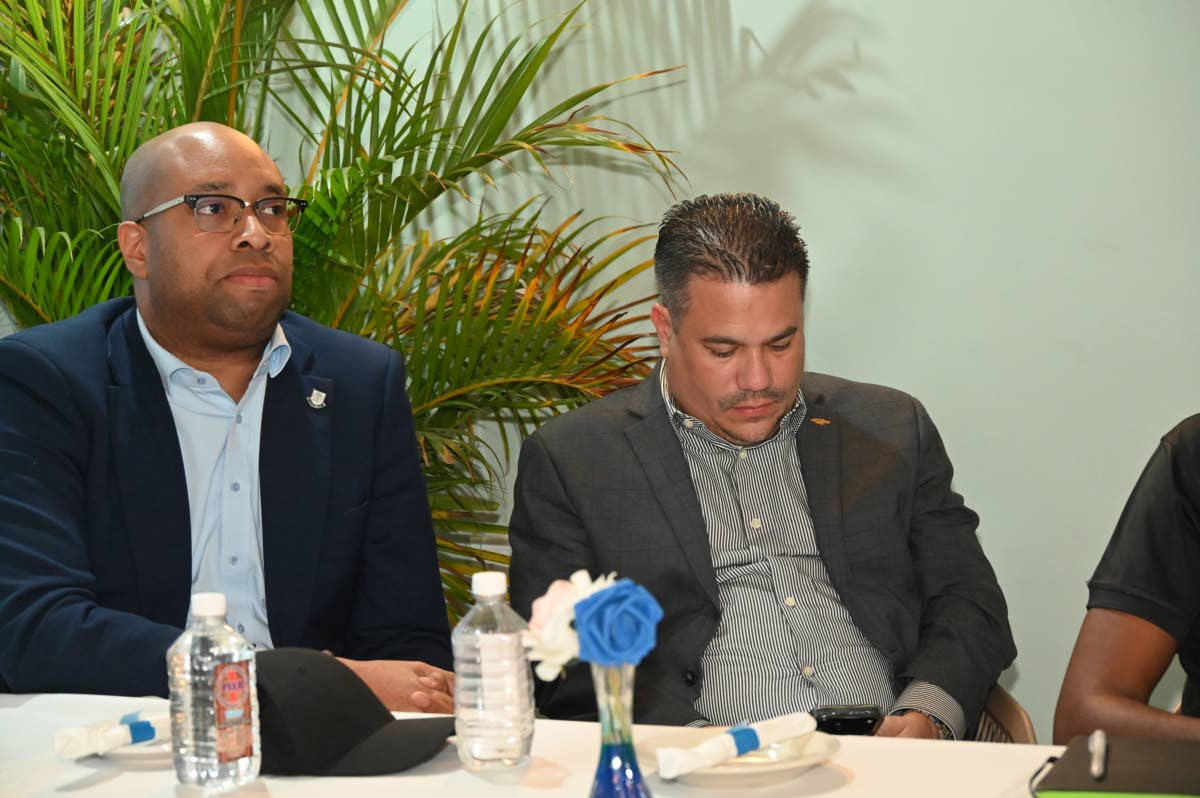 Minister of state in the Ministry of Industry, Investment and Commerce, Delano Seiveright (left), and Minister of Water Matthew Samuda at a stakeholder engagement meeting at Pier One in Montego Bay on Tuesday. Photo - Photo by Janet Silvera
-
Minister of state in the Ministry of Industry, Investment and Commerce, Delano Seiveright (left), and Minister of Water Matthew Samuda at a stakeholder engagement meeting at Pier One in Montego Bay on Tuesday. Photo - Photo by Janet Silvera
-
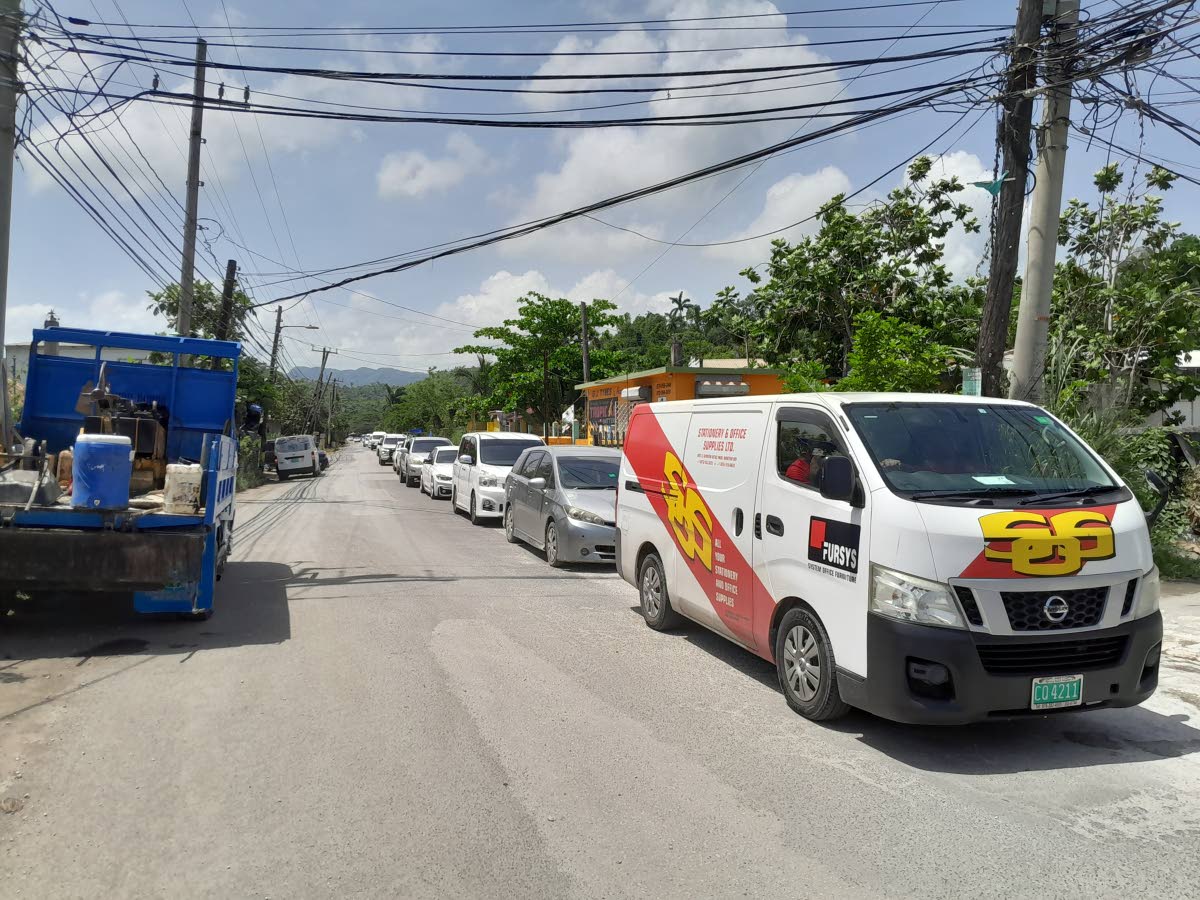 Traffic grinding to a halt as it enters Lucea, Hanover, as a result of potholes along Seaward Drive. Photo - File
WESTERN BUREAU:
With tourists spending hours travelling between Montego Bay and Negril and workers struggling to reach their jobs on time, the Government is moving to ease traffic disruptions along that corridor ahead of the winter tourist season.
The intervention follows mounting complaints from locals, hoteliers, business operators, and other interests about extensive road rehabilitation and water infrastructure projects that have created severe traffic congestion across sections of St James, Hanover, and Westmoreland.
Minister of State in the Ministry of Industry, Investment and Commerce, Delano Seiveright, said the complaints, some of which reached Prime Minister Dr Andrew Holness, prompted a meeting involving government ministers, engineers, the National Works Agency, the National Water Commission, and private-sector representatives.
“There are too many people calling that they’re late for work. There are too many tourists calling that it’s taking them hours to get from Montego Bay to Negril,” Seiveright told The Gleaner.
He said business operators were also complaining about their inability to manage their operations effectively because of the time being lost in traffic.
“Despite the fact that we have progress happening with the roads, and so on, especially in Lucea, it cannot negatively impact productivity. We already have a productivity problem in Jamaica,” he argued.
Seiveright acknowledged that the simultaneous execution of roadworks, water infrastructure upgrades and post-hurricane reconstruction had created “some amount of chaos”, requiring better coordination among the agencies involved.
However, he insisted that the projects would continue without major delays.
“What we have to do is ensure that we have appropriate alternative routes, which I know is a work in progress,” he said, adding that these routes must be made passable while contractors accelerate their work.
Meanwhile, supervising engineer for Packages Three and Four of the Government’s SPARK road rehabilitation programme, Andrew Evans, said contractors were racing to make critical sections of the Montego Bay–Negril corridor trafficable by December 15, the start of the winter tourist season.
Evans, of SJE Consultants Limited, said approximately $4.1 billion is being spent rehabilitating seven sections of the corridor, stretching from Howard Cooke Boulevard in Montego Bay to Negril.
Critical areas
The immediate focus is on three critical areas: Westgreen Avenue, Great River, and Lucea.
“The aim is to get us on roller-compacted concrete, which is a driveable, trafficable surface,” Evans explained, noting that the final asphalt layer would follow.
He said the target was to have the disturbed section at Great River paved, Westgreen Avenue carrying four lanes of traffic between Barnett Street and Howard Cooke Boulevard, and sections of Lucea made trafficable by mid-December.
Alternative routes are also being examined although Evans acknowledged that several require remedial work and others are too narrow to accommodate large vehicles comfortably.
He said police assistance would be critical to reducing bottlenecks and improving traffic discipline along the corridor.
Hanover Eastern Member of Parliament Andrea Purkiss has called for urgent repairs to the Kingsvale-Glasgow road, arguing that it offers a more practical alternative for tourists and tourism workers travelling to Negril.
Purkiss, the opposition spokesperson on tourism, said the routes currently being considered would primarily benefit residents travelling to communities, schools, and health facilities rather than motorists seeking to bypass the worst congestion along the main tourism corridor.
“For travellers, our tourists and workers travelling into Negril, it is not realistic,” she said of the proposed alternatives.
She recommended that the authorities immediately undertake patching and bushing along the Kingsvale-Glasgow road, which connects to Green Island.
According to Purkiss, the route could reduce travel time through the affected area to approximately 35 to 40 minutes, compared with motorists spending up to 90 minutes waiting in traffic before reaching existing alternative routes.
Water Minister Matthew Samuda said the scheduling of major pipe-laying activities would take account of hotel occupancy levels and school traffic to minimise disruption.
Consulting stakeholders
Samuda said the Government had been consulting tourism stakeholders, including the Jamaica Hotel and Tourist Association, to identify periods when the most disruptive work could be undertaken with the least impact on visitors and residents.
He explained that some particularly challenging sections, including bridge crossings, would be tackled during periods of lower hotel occupancy.
Although night work would help reduce congestion, Samuda said it costs approximately 50 per cent more than daytime operations because of the additional lighting and equipment requirements.
Nevertheless, provisions have been made for selected night operations where disruption is expected to be particularly severe.
The minister said the US$170-million first phase of the Western water infrastructure programme involves replacing approximately 67 kilometres of major pipelines, with pipe-laying expected to continue into 2028.
He maintained that suspending the works was not an option, particularly as western Jamaica faces the prospect of another period of intense drought next year.
Samuda said water losses exceed 70 per cent in some sections of the existing network, making the upgrades essential to improving supplies for residents, businesses, and the tourism industry.
The challenge now facing the authorities is to keep the infrastructure projects moving while ensuring that visitors, tourism workers, and businesses are not left bearing the brunt of prolonged traffic disruptions during one of the industry’s most important seasons.
janet.silvera@gleanerjm.com