‘Some JPs should not be there’
Loading article...
-
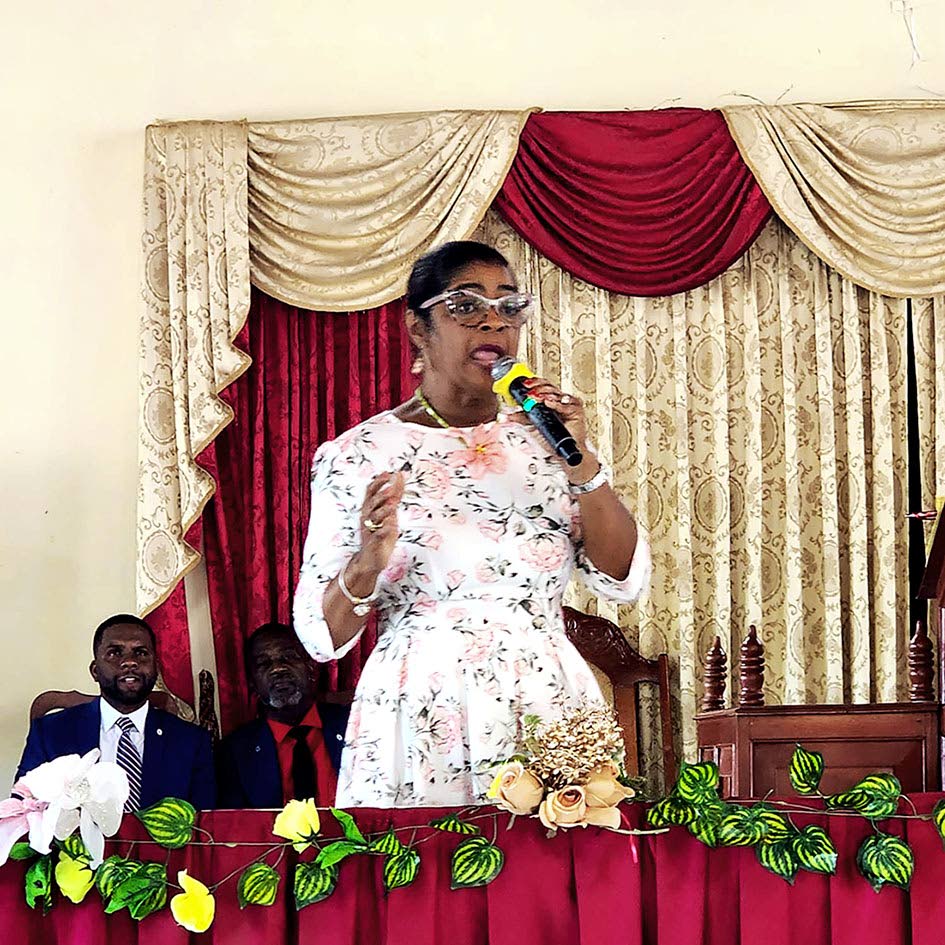 Claudette Bryan, western regional vice-president of the Lay Magistrates Association of Jamaica (LMAJ), delivered the sermon at the association’s 41st anniversary church service held at Norwood Wesleyan Holiness Church, hosted by the St James Chapter of the LMAJ. Seated from left are Dujaughn Brown, first vice-president; and Floyd V. Hitchman, president of the LMAJ St James Chapter. Contributed
-
Claudette Bryan, western regional vice-president of the Lay Magistrates Association of Jamaica (LMAJ), delivered the sermon at the association’s 41st anniversary church service held at Norwood Wesleyan Holiness Church, hosted by the St James Chapter of the LMAJ. Seated from left are Dujaughn Brown, first vice-president; and Floyd V. Hitchman, president of the LMAJ St James Chapter. Contributed
-
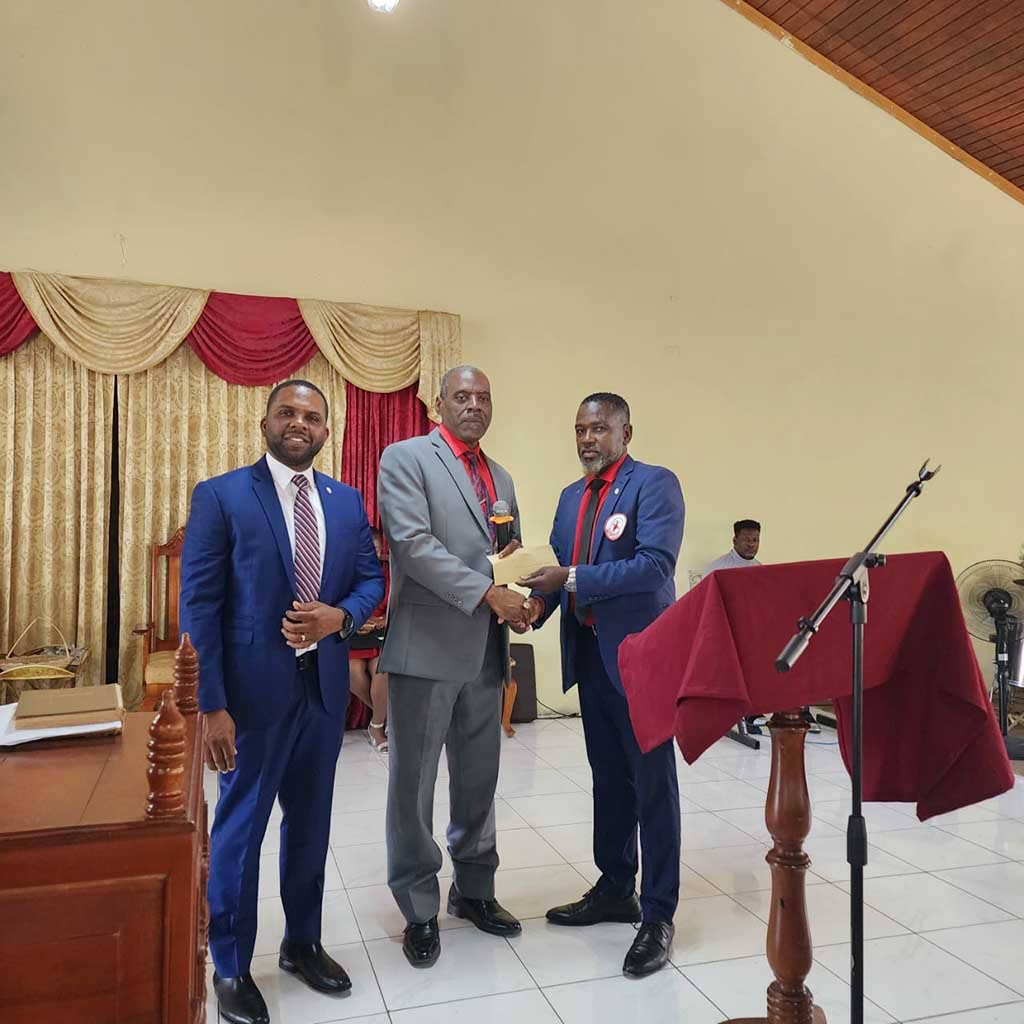 Floyd Hitchman (right), president of the St James Chapter of the Lay Magistrates Association of Jamaica, presents an envelope containing an undisclosed financial contribution to Paul Blake, pastor of the Norwood Wesleyan Holiness Church and the chapter’s second vice-president, as Dujaughn Brown, the association’s first vice-president, looks on. Contributed
WESTERN BUREAU:
Claudette Bryan, western regional vice-president of the Lay Magistrates Association of Jamaica (LMAJ), has said that some individuals holding the title of Justice of the Peace (JP) “should not be holding that position”, arguing that their poor conduct and disregard for ordinary citizens are undermining the dignity of the office.
Bryan made her stinging critique while delivering a sermon at the Norwood Wesleyan Holiness Church, in Montego Bay, to mark the LMAJ’s 41st anniversary. She challenged fellow JPs to reflect on whether their behaviour aligns with the principles of integrity, respect and public service expected of the role.
“You may have people sitting in your office for half an hour to an hour to get a signature,” said Bryan “And we walk into our offices, and someone is waiting for us and we walk past them. We don’t even recognise that there is a lowly citizen waiting for one signature.”
Bryan’s remarks highlighted what she described as a troubling reality faced by many Jamaicans seeking routine services from JPs,including document certification, tasks that do not require personal familiarity with the individual requesting assistance.
“I am standing up this morning because I have seen it,” Bryan told the members of the LMAJ, both JPs and law magistrates. “Too many of our people suffer in silence because they have to wait and they have nobody else to turn to.”
Bryan urged JPs to remember that their role is rooted in public service rather than prestige or privilege.
“We are servants. We don’t look for people to serve us, we serve people. We are here to serve. We are not looking for accolades,” she said.
She also warned against using the office to seek favours or personal advantage, stressing that assistance given to citizens should never come with expectations attached.
“When we do something for somebody, do we look for favours? When a man comes to us and we do something for them, do we ask them for something in return? Absolutely not,” she said.
She also condemned the practice of reminding citizens of assistance provided, telling members bluntly that they should not do it.
“If you do something for somebody, don’t turn around and say, ‘Remember me, remember that I signed the paper for you.’ Cut it out,” she said.
She further urged JPs to treat citizens with dignity and communicate respectfully, even when they are unable to immediately assist.
“You may be busy but let people know. Say, ‘Sir or Madam, I am busy right now, please give me a couple minutes,’” she advised.
Reflecting on the history of the association, Bryan said the Lay Magistrates Association of Jamaica was founded on principles of honesty and fellowship rather than political alignment.
“This association was not built on political affiliation. It was built through honesty and to allow justices of the peace across the island to come together for fellowship, growth, camaraderie, and to build each other up,” she said.
She reminded that the office of justice of the peace must be distinguished by conduct that reflects higher moral standards.
“As justices of the peace, our lives have got to be different from the rest. Our attitudes have got to be different from the rest. The way we speak to people has got to be different from the rest,” she said, warning that the title alone is meaningless without integrity. “We have seen how unruly we have become, yet we say we are justices of the peace. Tidy up yourselves.”
albert.ferguson@gleanerjm.com