Shipping | Jamaica’s 50-year maritime journey shapes IMO Council bid
Loading article...
-
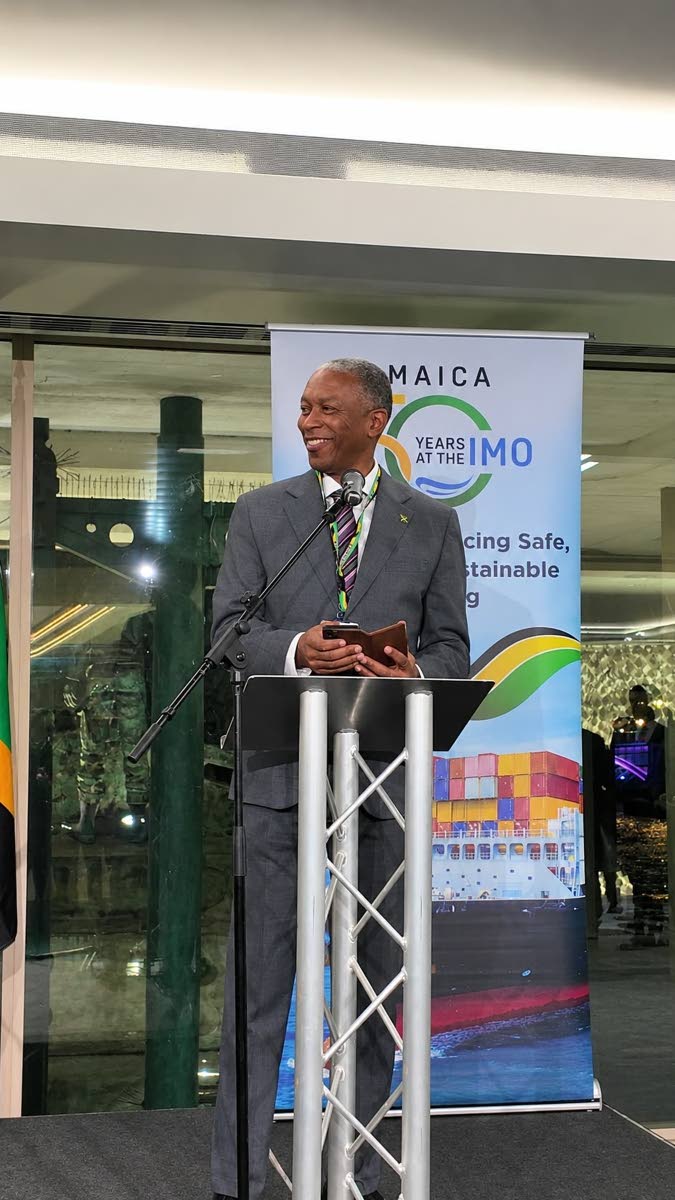 Bertrand Smith, director general of the Maritime Authority of Jamaica (MAJ), addresses delegates at the launch of Jamaica’s candidature for election to Category C of the Council of the International Maritime Organization (IMO) in London on Monday, November 2. . Photo - Contributed
-
Bertrand Smith, director general of the Maritime Authority of Jamaica (MAJ), addresses delegates at the launch of Jamaica’s candidature for election to Category C of the Council of the International Maritime Organization (IMO) in London on Monday, November 2. . Photo - Contributed
-
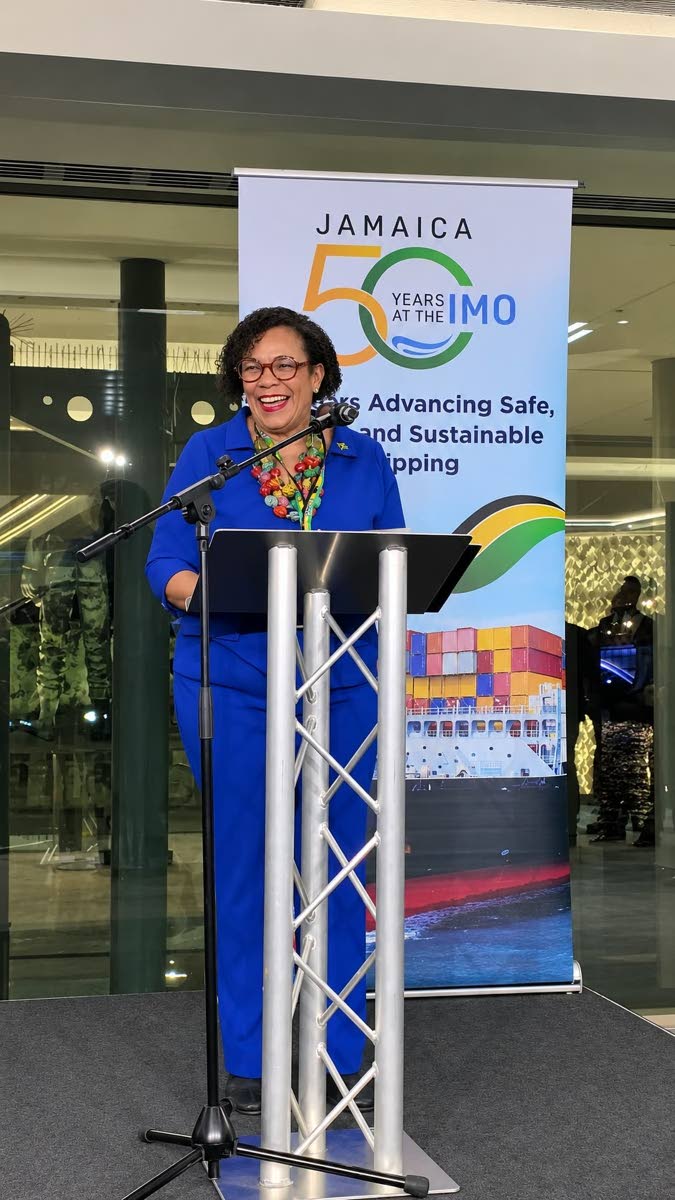 Corah Ann Robertson-Sylvester, chair of the Maritime Authority of Jamaica (MAJ), addresses delegates at the launch of Jamaica’s candidature for Category C of the IMO Council, held at the organisation’s headquarters in London on Monday, November 2. Photo - Contributed
-
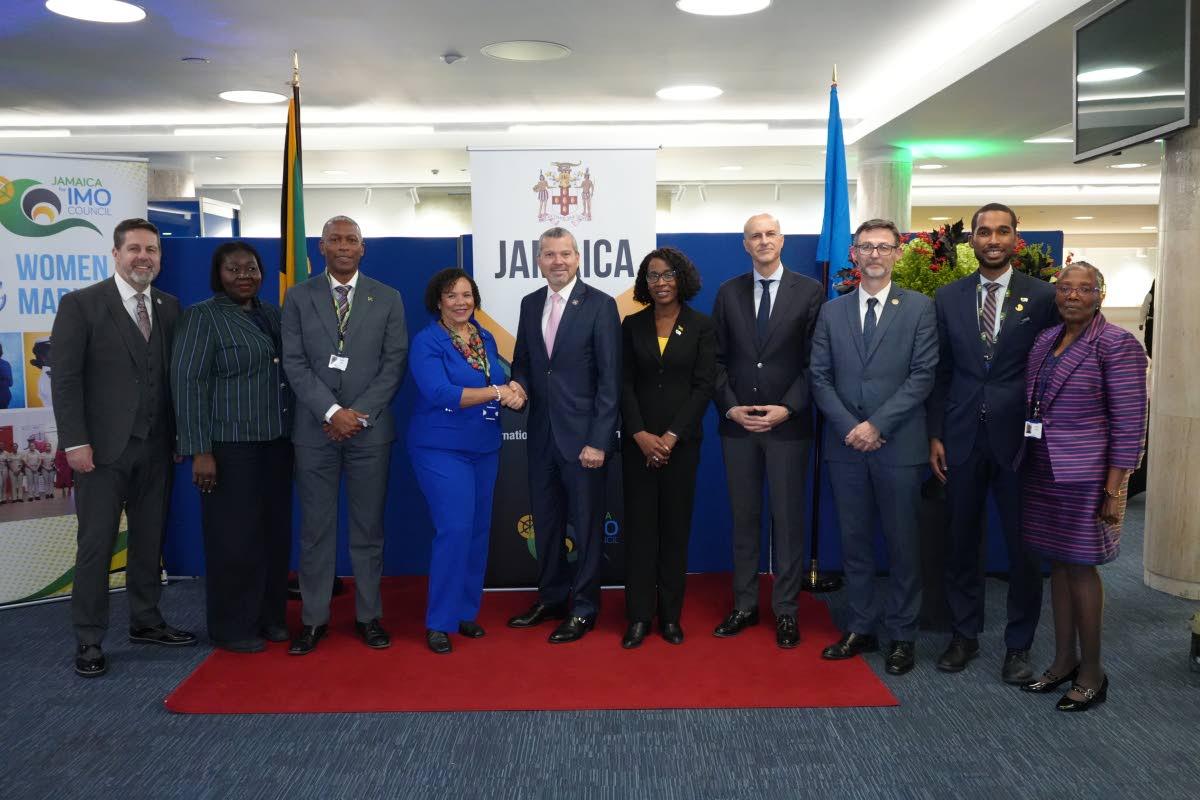 Jamaica launched its candidature for election to Category C of the Council of the International Maritime Organization (IMO) at the organisation’s headquarters in London. Pictured from left are: David Osborn, director, Marine Environment Division, IMO; Azara Prempeh, director, Administrative Division, IMO; Bertrand Smith, director general, Maritime Authority of Jamaica (MAJ); Corah Ann Robertson-Sylvester, chair, MAJ; Arsenio Dominguez, secretary-general, IMO; Cyeth Denton-Watts, deputy high commissioner of Jamaica in London; Victor Jiménez (Spain), chair of the IMO Council; Damien Chevallier, director, Maritime Security Division, IMO; Dimitry Robertson, alternate permanent representative, Permanent Mission of Jamaica to the IMO; and Claudia Grant, deputy director general, MAJ. Photo - Contributed
For Jamaica, the case for another term on the International Maritime Organization (IMO) Council begins with a simple reality: for island states and developing economies, shipping is not a distant global industry. It is a lifeline for trade, travel and connection.
That understanding was at the heart of the country’s launch of its re-election bid to the Council’s Category C at IMO headquarters in London on November 2. As Jamaica marks 50 years of membership in the organisation, the occasion carried both the weight of a record and the purpose of a next chapter. The country is seeking support in the 2027 elections for a seat in the 2028–2029 biennium.
Corah Ann Robertson-Sylvester, chair of the Maritime Authority of Jamaica (MAJ) and president of the Shipping Association of Jamaica (SAJ) framed the bid as a continuation of service. “As we launch this candidature, our message is simple: we are ready to continue serving, ready to contribute and ready to work with you,” she told delegates, diplomats and IMO officials.
The words were direct, but the story behind them reaches beyond Jamaica’s own interests. Robertson-Sylvester argued that the council’s work is stronger when it reflects the varied realities of its members, particularly Small Island Developing States and Least Developed Countries. For countries whose economies and connectivity depend heavily on maritime transport, decisions on safety, security, environmental rules and implementation carry immediate consequences.
Jamaica’s case for representation is also practical. Its ports handle container transshipment and cruise traffic, while a growing maritime cluster includes a floating drydock and an expanding bunkering industry. Jamaica was the first country in the Caribbean to facilitate liquefied natural gas bunkering. During the week of the launch, it was also preparing to hand over an IMO-commissioned report on alternative marine fuels, produced under the GreenVoyage2050 Programme.
These developments place Jamaica in the middle of a transition facing the global shipping industry: how to reduce emissions while ensuring that countries with different resources and capacities can participate. The report is one contribution to that effort. The wider argument in Robertson-Sylvester’s address was that policy must be developed with developing countries in the conversation, and with the technical cooperation and capacity-building needed to put agreed standards into practice.
That bridge between global rules and regional realities is a recurring part of Jamaica’s maritime role. As a flag, port and coastal state, the country has ratified all major IMO conventions governing safety, security and protection of the marine environment. The Caribbean Maritime University, the only IMO-accredited university in the English-speaking Caribbean, trains officers who go on to work aboard ships around the world. Jamaica also hosts the secretariats of the Women in Maritime Association, Caribbean, and the Caribbean Memorandum of Understanding on Port State Control, both led by Jamaican women.
For Robertson-Sylvester, that work is inseparable from the people who shape the sector. Jamaica trains female seafarers through the university and supports the IMO’s gender programme through regional leadership. As both MAJ chair and head of the SAJ, she described herself as “a proud testament to Jamaica’s commitment to the IMO’s gender programme”.
Jamaica’s record over five decades is therefore presented not as a claim to influence for its own sake, but as evidence of sustained participation: adopting international standards, contributing to environmental programmes, and building capacity across the region. The country has partnered with the IMO on GloLitter, now PROSEAS, to address marine litter, and has supported initiatives in decarbonisation, energy efficiency and pollution reduction.
The re-election bid asks member states to let Jamaica continue that work from the council, where it says it can contribute to fair and inclusive decision-making and keep Caribbean and wider developing-country perspectives in view. The election will take place next year, but the campaign’s message is rooted in the half-century already completed: maritime cooperation works best when the countries most affected by its rules have a voice in shaping them.