Commentary
May 03 2026
Tres-Ann Kremer | Fit for the moment: The standard CARICOM must now meet
Updated
May 3 2026
5
min read
Loading article...
-
Dr Tres-Ann Kremer
-
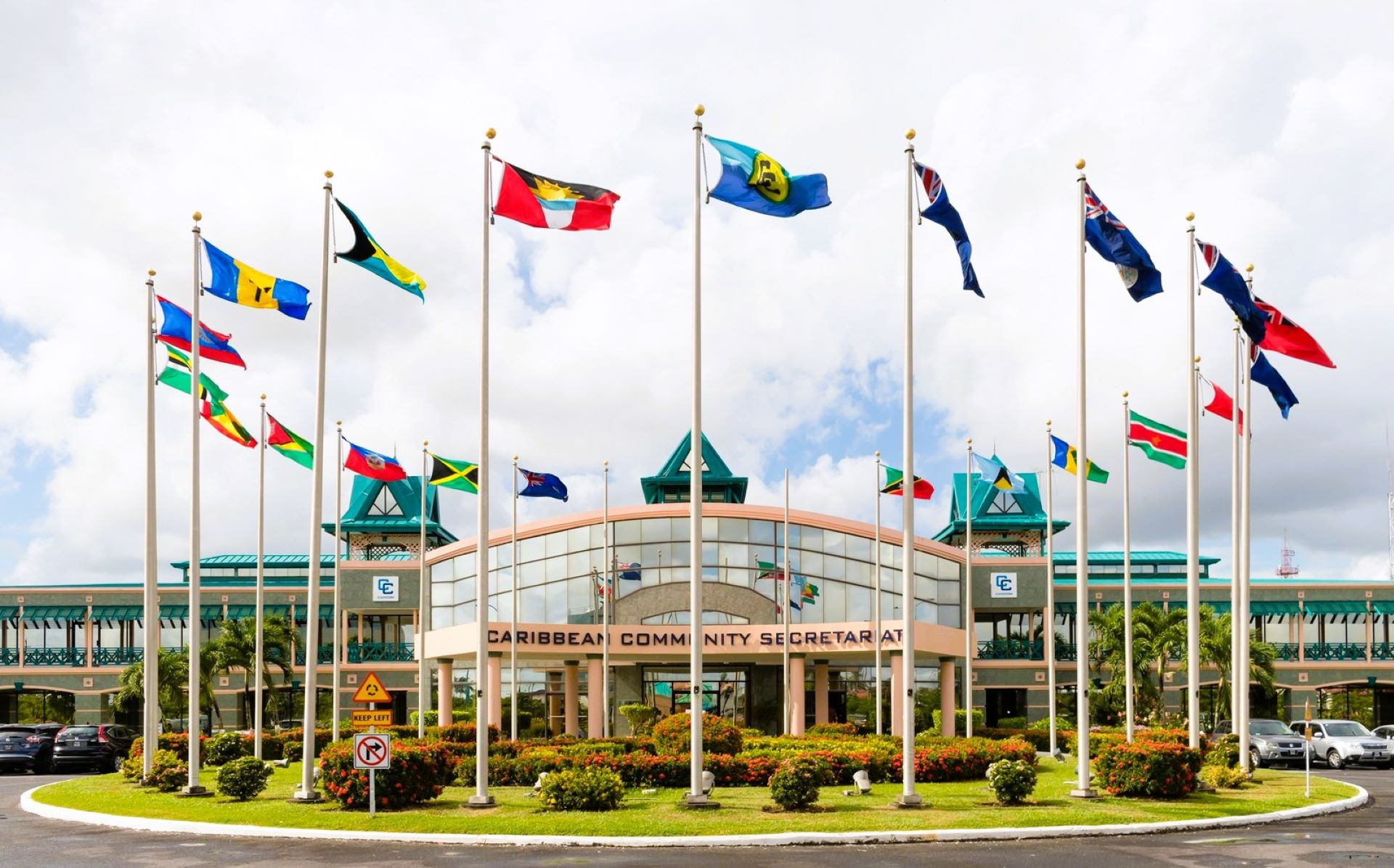
At the opening ceremony of the CARICOM Meeting in St Kitts and Nevis, Prime Minister of Jamaica, Andrew Holness, posed a question that has acquired sharper edges every passing week. He asked whether CARICOM could deliver for its people with urgency and relevance in a rapidly changing world. It is an even more urgent question now.
The region is being pressed from two directions at once. From outside, a geopolitical environment shifting faster than its collective capacity to respond. From within, a governance dispute that has hardened into public correspondence, entrenched positions, and unwanted headlines.
It would be too convenient to treat the secretary-general reappointment controversy as the source of CARICOM's internal tensions. It has, instead, brought into plain sight what was already straining beneath the surface: the foreign policy divergences, the frustrations over implementation, the gradual strain on confidence in how the institution governs itself. These predate the reappointment matter.
The external pressures have a concrete shape. The forced change in Venezuela's political leadership, the deepening crisis in Cuba, and external pressure on CARICOM member states to wind down Cuban medical cooperation arrangements have reshaped the region's energy, migration, diplomatic, and public-health landscape in ways still unfolding. Active United States military operations in the southern Caribbean, pressure to accept third-country nationals, and demands to limit engagement with China add another layer to the difficult choices governments across the region are navigating largely alone.
The region's economic geography is also being redrawn. Guyana's emergence as a major energy producer and Suriname's expected rise are reshaping who holds energy leverage in the region and on what terms. For CARICOM countries that spend a significant share of national income on imported fuel, this shift holds promise. But translating that promise into regional opportunity requires institutional cohesion anchored in trusted leadership – both now under strain.
St Kitts and Nevis Prime Minister Drew's approach ahead of the 50th meeting deserves recognition. His high-level bilateral engagements across the region before the meeting convened reflected a clear understanding that productive dialogue must be cultivated in advance. That all Heads of Government were present is testament to that effort. That goodwill remains a foundation the region can build on.
The first order of business is to resolve the secretary-general appointment with clarity and finality. This addresses the immediate flashpoint and creates space for the harder conversations ahead. CARICOM's endurance has long been grounded in consensus decision-making underpinned by a rules-based system. In this context, the secretariat's role is to provide impartial, integrity-driven counsel to member states, anchored in the Treaty of Chaguaramas and the Rules of Procedure of the Conference.
CARICOM is not monolithic, and it remains aligned on the issues that matter most to its people. Disagreement is the natural expression of sovereign democracies navigating a turbulent world together. What the region cannot afford is for disagreement to calcify into institutional crisis because the processes for managing it lack the clarity and robustness the moment demands.
In the foreign policy sphere, the treaty calls for enhanced coordination, seeking common positions as far as practicable. The secretariat's role is to support that coordination, providing analysis and guidance that help members advance the collective interest even where a unified position is not immediately clear.
Case in point, the Caribbean's commitment to itself as a Zone of Peace is one of the region's most consequential and hard-won foreign policy positions. That it is under strain reflects the weight of a security crisis every CARICOM country feels acutely. That shared experience is itself a compelling case for dialogue, and the secretariat must use its full weight and good offices to bring member states to the table.
Recent public positioning from Trinidad and Tobago has caused genuine disquiet in some regional capitals. Yet the diplomatic ground is not as barren as it might appear.
Venezuela's Acting President Delcy Rodriguez recently visited Grenada and Barbados, signalling that Venezuelan diplomatic channels remain engaged with the region. Those engagements carry real economic value, including for Trinidad and Tobago, whose energy prospects significantly depend on access to Venezuelan gas fields, including the Dragon Field.
They have also generated concern following the prominent display of a symbol asserting Venezuela's territorial claim over the Essequibo, a claim CARICOM has consistently and unequivocally rejected. Navigating that tension, engaging Venezuela where the region's interests call for it while holding firm on Guyana's sovereignty, is the work a secretariat at the height of its mandate must drive through coordinated regional diplomacy. It is a strong example of why institutional coherence and settled authority cannot be treated as secondary.
The external pressures tell only part of the story. Across the region, governments are transforming — from public-service modernisation agendas in The Bahamas and Barbados to Jamaica's national ID system, St Kitts and Nevis' e-ID programme in development, Guyana's digital health training institute, and Trinidad and Tobago's drive towards AI-ready digital government. A regional momentum is building towards service delivery that is faster, more responsive, and more accountable to citizens.
That momentum requires that the secretariat and regional institutions keep pace. How they align their own transformation with the delivery culture member states are building at home is a challenge CARICOM's leaders must now mandate.
Some regional institutions are already leading the way. CDEMA's disaster response, CARPHA's public- health leadership, CXC's educational reach, and CDB's stewardship of regional development finance are proof of what purposeful regional delivery can look and feel like.
Citizens expect to see themselves reflected in the processes that serve them, a standard the late Owen Arthur anchored in CARICOM's Charter of Civil Society and its vision of shared regional ownership.
That regional ownership has a largely untapped dimension in the millions of CARICOM citizens living and voting in the United States, the United Kingdom, Canada, and Europe. What does not yet exist is the regional architecture to harness that collective influence for shared ends. The secretariat is uniquely positioned to design and convene it with CARICOM countries.
The Review of Regional Institutions, commissioned in 2021, remains ongoing five years later. Five years is too long. The region's citizens and member states deserve clarity on when this work will be concluded and what it will produce.
Across the Caribbean, people are not waiting. They are harnessing technology to build businesses and forge new income pathways, connecting across borders with a confidence that institutions have yet to match. The region cannot afford institutional cultures that continue to operate as though it were still twenty years ago.
Byron Blake recently reflected on the era of Demasian/Ramphalian leadership. Both read their moment clearly, held a long regional vision against immediate pressures, and through persistence and persuasion, brought leaders to common ground they had not known they could share. That is the standard this moment demands, one that can only be met from a position of settled authority.
Prime Minister Holness asked whether CARICOM could deliver with urgency and relevance. The region's answer must be yes, and the transformation work must be accelerated.
Dr Tres-Ann Kremer was the chef de cabinet at the CARICOM Secretariat and head of Good Offices for Peace and Political Lead Caribbean at the Commonwealth Secretariat. The views expressed in this article are her own and don’t necessarily represent those expressed by the organisations she served in. Send feedback to columns@gleanerjm.com