Jeanelle van GlaanenWeygel | Celebrating OAS-Jamaica partnership
Loading article...
-
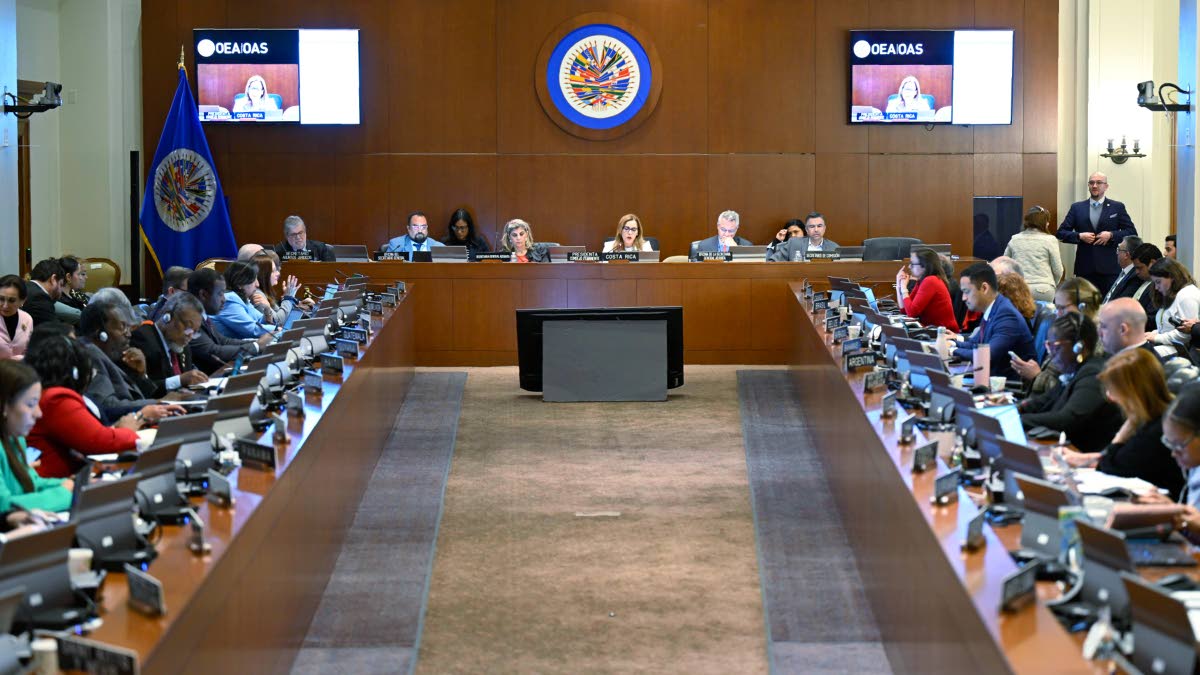 Regular meeting of the Permanent Council of the OAS in Washington, DC.
-
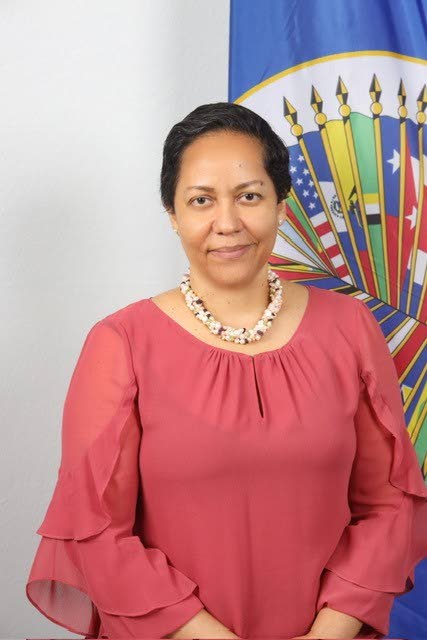 Jeanelle van GlaanenWeygel
Each year, Pan American Day invites us to reflect on a shared vision – one rooted in cooperation, solidarity, and the belief that the countries of the Americas are stronger together. In 2026, that reflection feels particularly timely for Jamaica and the wider hemisphere.
The past year has brought both unprecedented opportunities and significant challenges. The Organization of American States (OAS) elected its first secretary general from the Caribbean and its first woman assistant secretary general, important milestones for representation and inclusion at the hemispheric level.
Yet 2025 also reminded us of our shared vulnerability. In October, Hurricane Melissa, a Category 5 storm and the strongest ever to hit Jamaica, caused widespread devastation across the island. In response, the General Secretariat of the OAS provided emergency assistance through the Inter-American Emergency Aid Fund (FONDEM), alongside immediate, on-the-ground support to affected communities, delivered through the OAS Office in Jamaica, in collaboration with the OAS Staff Association. These actions, though modest in scale, reflect an essential principle of multilateralism: solidarity in times of need.
Beyond emergency response, the OAS continued to work closely with Jamaica throughout 2025. At the invitation of the Electoral Commission of Jamaica, the Organization deployed an Electoral Observation Mission for the September 2025 general parliamentary elections, supporting transparency, credibility, and public confidence in the democratic process.
At the same time, partnerships at the national level continued to deepen. A notable example is the collaboration with the University of the West Indies to create the OAS Youth Partnership Programme (OAS YP), which aims to bring the work of the OAS closer to young people in Jamaica and foster greater awareness of hemispheric cooperation.
That would represent in and of itself an outstanding return on investment for Jamaica. But it actually does not stop there: In total, the OAS implemented more than 50 activities in Jamaica in 2025. These ranged from institutional strengthening and training programmes to conferences and technical cooperation initiatives across the organisation’s four pillars: democracy, human rights, multidimensional security, and integral development. In line with Jamaica’s national priorities, much of this engagement focused on development, democracy, and security.
NOT ONE-DIRECTIONAL
Importantly, this partnership is not one-directional. Jamaica has also contributed to the hemisphere, including providing technical support to Trinidad and Tobago through the OAS Inter-American Network for Labour Administration (RIAL). This exchange of expertise underscores that multilateralism is built not only on support received but also on contributions shared.
Looking ahead, the OAS and Jamaica are working together to finalise a 2026–2030 Country Strategy, one that reflects national priorities while aligning with broader hemispheric goals.
This forward-looking partnership comes at a time when multilateralism itself is being tested. But this moment should not be seen only as a challenge. It is also an opportunity to renew, to adapt, and to demonstrate, in practical terms, the continued relevance of working together.
At its core, the OAS remains the principal political forum of the Americas. Its legitimacy rests not on tradition alone but on its ability to deliver, facilitating dialogue, strengthening democratic institutions, addressing shared security challenges, and advancing development across member states.
The new administration of the OAS General Secretariat has taken steps to improve how the organisation works, strengthening internal coordination, enhancing transparency, and increasing engagement with member states and partners. These efforts are not abstract reforms. They are essential to ensuring that the OAS can deliver meaningful results on the ground. And delivery is what ultimately matters.
Across the hemisphere, the OAS continues to support democratic governance, promote inclusive political dialogue, and strengthen citizen participation because democracy must not only function. It must be understood and felt by the people it serves.
In the area of security, the organisation is addressing the growing complexity of transnational organised crime, recognising that it is as much a governance challenge as it is a law-enforcement issue. Through cooperation, capacity-building, and information-sharing, the OAS is helping member states respond to evolving threats in a coordinated and effective manner.
SIMPLE TRUTH
At the same time, work in development, justice, and human rights reflects a simple truth: peace, security, democracy, and prosperity are interconnected. One cannot be sustained without the others.
For Jamaica, and for the Caribbean more broadly, this integrated approach is particularly important. The challenges we face are shared across borders and so, too, must be the solutions as multilateralism requires commitment.
The effectiveness of the OAS depends on the active engagement of its member states – not only in political dialogue but also in ensuring the financial sustainability of the organisation. Predictable resources are essential if the OAS is to continue delivering for its citizens.
At the same time, the General Secretariat remains committed to doing its part: improving efficiency, mobilising new partnerships, and expanding cooperation with regional and international actors as well as the private sector.
Looking ahead, our focus is clear. We will continue to strengthen partnerships, expand opportunities for cooperation, and ensure that the work of the OAS is visible and meaningful to the people of the Americas, especially our youth.
Pan American Day reminds us that the idea of the Americas as a community is not abstract. It is built through daily cooperation, mutual respect, and shared purpose.
The OAS remains a public good for our hemisphere, tested, evolving, and ready to meet new challenges alongside partners like Jamaica.
When multilateralism delivers results, when it strengthens democracy, responds to crises, and empowers citizens, it proves its relevance not through rhetoric but through impact. And in today’s uncertain world, that relevance matters more than ever.
Jeanelle van GlaanenWeygel is the resident representative of Organization of American States in Jamaica. Send feedback to columns@gleanerjm.com.